Sales Strategy
How to Accelerate Sales Cycles for B2B Revenue Growth
The Sales Coach Network8 min read


Nearly 45 percent of British sales teams struggle to unite strategy, tools, and execution in a way that drives consistent growth. For leaders in British B2B organisations, aligning the moving parts of the sales process can make the difference between stalled progress and rapid market gains. This guide uncovers how combining strategic direction, effective frameworks, and disciplined processes empowers British teams to accelerate sales cycles and surpass growth targets.
Table of Contents
Stage 1: Define Strategic Direction And Align Sales Objectives
Stage 2: Equip Teams With Effective Tools And Qualification Frameworks
Stage 3: Install Disciplined Execution To Advance Deals Swiftly
Stage 4: Streamline Stakeholder Engagement And Decision Processes
Stage 5: Monitor Progress And Verify Cycle Time Improvements
Quick Summary
Key Point | Explanation |
1. Define clear organisational objectives | Align sales goals with broader business outcomes to ensure cohesive revenue generation and team motivation. |
2. Implement effective qualification frameworks | Use structures like BANT to prioritise high potential leads, enhancing your team’s focus and efficiency in sales efforts. |
3. Establish disciplined execution practices | Develop robust pipeline management systems to monitor deal progression systematically, enabling proactive and informed decision-making. |
4. Streamline stakeholder engagement | Create methodologies to map stakeholder interactions, ensuring meaningful connections that reflect an understanding of clients’ needs. |
5. Monitor performance with context | Use advanced analytics to track sales metrics while interpreting data against specific organisational challenges for insightful improvements. |
Stage 1: Define strategic direction and align sales objectives
Defining a strategic direction for your sales organisation requires a systematic approach that transforms disconnected activities into a cohesive revenue generation machine. By carefully aligning organisational structures and resources, revenue leaders can optimise processes and team performance across complex B2B environments.
The process begins with a comprehensive assessment of your current sales ecosystem. This means conducting a detailed evaluation of your existing commercial strategy, examining how different departments interact and whether their objectives genuinely support revenue generation. Integrated business planning techniques prove critical here, ensuring that functions like marketing, sales, and operations move in synchronised harmony towards shared growth targets.
To achieve genuine strategic alignment, start by documenting clear organisational objectives that transcend individual team metrics. Your goals should connect directly to broader business outcomes measuring revenue growth, market expansion, and customer acquisition. Break these high level objectives into specific, measurable milestones that each sales team member can understand and contribute towards. This approach transforms abstract strategy into actionable targets that motivate and guide your entire sales organisation.
Warning: Generic strategies fail. Your strategic direction must be unique to your specific market positioning, customer base, and organisational capabilities. Avoid copying competitor approaches or adopting one size fits all methodologies.
Stage 2: Equip teams with effective tools and qualification frameworks
Successfully accelerating sales cycles demands strategic investment in robust qualification methodologies that empower your sales professionals to identify and prioritise high potential opportunities. Effective lead qualification frameworks such as BANT, CHAMP, MEDDIC, and GROW provide structured approaches for systematically assessing prospect viability.
The BANT framework offers a comprehensive method for evaluating prospects based on Budget, Authority, Need, and Timing. By implementing this structured approach, your sales team can rapidly filter opportunities, concentrating energy on leads with the highest probability of conversion. This targeted strategy transforms unfocused prospecting into a precision instrument for revenue generation.
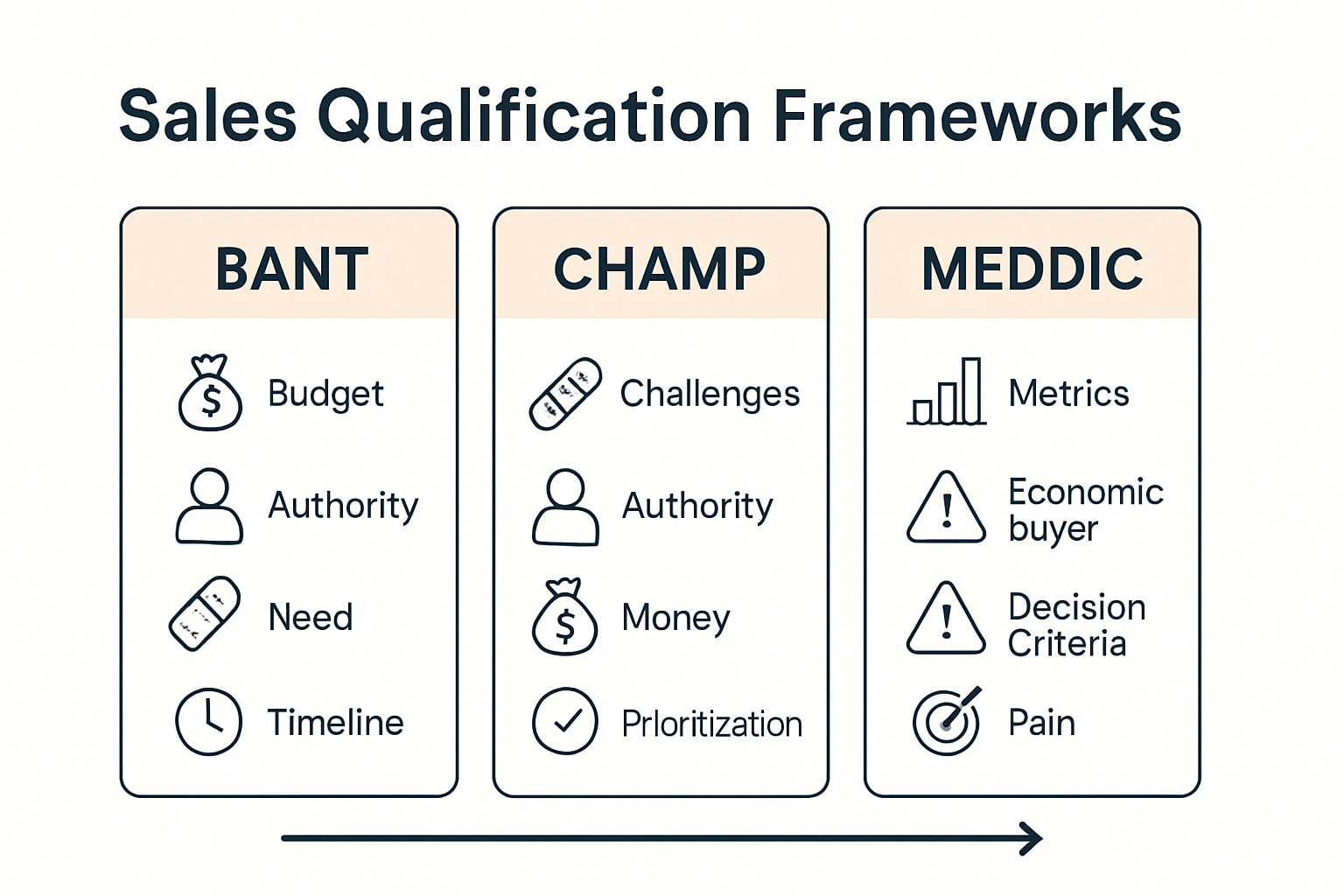
To implement these frameworks effectively, create comprehensive training programmes that teach your team not just the mechanics of qualification, but the nuanced art of meaningful prospect engagement. Develop customised templates, conversation guides, and assessment tools that align with your specific market and sales ecosystem. Regularly review and refine these tools based on real world performance data, ensuring they remain adaptive and relevant.
Warning: Qualification frameworks are not rigid checklists. They are dynamic guides that require intelligent interpretation and contextual understanding from your sales professionals.
Stage 3: Install disciplined execution to advance deals swiftly
Accelerating sales cycles demands a systematic approach to deal progression that transforms sporadic efforts into a precision driven process. Machine learning workflows for sales predictive modelling offer powerful techniques for enhancing decision making and accelerating deal momentum by providing data driven insights into potential sales outcomes.

Implementing disciplined execution requires developing a rigorous pipeline management system that tracks deal progression with scientific accuracy. Regression approaches in sales pipeline analysis enable sales teams to predict win propensity more effectively, allowing for targeted interventions and strategic resource allocation. This means creating standardised deal review processes, establishing clear progression criteria, and implementing consistent checkpoints that objectively evaluate each opportunity’s advancement potential.
To truly embed disciplined execution, transform your sales approach from reactive to proactive. Develop granular tracking mechanisms that capture leading indicators of deal health, such as stakeholder engagement levels, decision maker interactions, and concrete next step commitments. Equip your team with visual pipeline dashboards that provide real time insights, enabling rapid strategic adjustments and preventing opportunities from stalling.
Warning: Disciplined execution is not about micromanagement. It is about creating a transparent, accountable system that empowers sales professionals to take informed, strategic actions.
Stage 4: Streamline stakeholder engagement and decision processes
Account-based marketing strategies provide a sophisticated approach to transforming complex stakeholder interactions into predictable revenue generation pathways. By treating each high value account as a distinct market, sales teams can develop targeted engagement strategies that align precisely with specific organisational needs and decision making dynamics.
Streamlining stakeholder engagement requires a structured methodology that maps comprehensive interaction networks within target organisations. Commercial management principles emphasise the importance of creating efficient market based interactions that enhance value creation. This means developing detailed stakeholder mapping tools, identifying key decision makers, understanding their individual motivations, and creating tailored communication strategies that resonate with each stakeholder’s specific priorities.
To execute this effectively, design a systematic stakeholder engagement framework that tracks interaction quality, frequency, and strategic progression. Create visual relationship maps that highlight decision pathways, communication preferences, and potential influence networks. Implement a rigorous tracking system that allows your team to monitor stakeholder sentiment, engagement levels, and movement through the decision making process with precision and clarity.
Warning: Stakeholder engagement is not about volume of interactions. It is about meaningful, strategic connections that demonstrate genuine understanding of the client’s business challenges.
Stage 5: Monitor progress and verify cycle time improvements
Accelerating sales performance demands a systematic approach to tracking and validating progression. Sales and marketing alignment through shared goals creates a robust framework for monitoring critical performance metrics and identifying opportunities for cycle time reduction.
Defining clear Ideal Customer Profiles and aligning sales objectives enables precision tracking of sales process effectiveness. This means establishing comprehensive measurement protocols that capture granular insights into each stage of the sales journey. Implement advanced analytics dashboards that provide real time visibility into key performance indicators such as average deal velocity, conversion rates, and stage progression times.
To ensure meaningful progress verification, develop a continuous improvement mechanism that goes beyond surface level metrics. Create a feedback loop where sales team members regularly review and analyse performance data, identifying bottlenecks and experimenting with targeted interventions. Conduct periodic deep dive analyses that examine not just quantitative metrics but also qualitative factors influencing sales cycle dynamics.
Warning: Metrics without context are meaningless. Always interpret data through the lens of your specific organisational challenges and market dynamics.
Accelerate Your B2B Sales Cycles with Proven Expertise
The article uncovers critical challenges such as unpredictable revenue, lengthy sales cycles, and inconsistent team performance that can stall your growth ambitions. If you recognise the pain points around aligning strategic direction, applying robust qualification frameworks, and enforcing disciplined execution to speed up deal progression then you need not face these alone. Our practical, systemic approach addresses these issues head on by embedding scalable sales operating systems rather than offering generic, one-time training events.
At The Sales Coach Network we specialise in partnering with senior revenue leaders from complex B2B organisations who demand measurable results. Through our Sales Accelerator Method, we align your team around clear commercial objectives, enhance skillsets with targeted training programmes, and instil a culture of accountability that reduces friction and sales cycle time. Don’t let stalled deals or unqualified pipelines hold you back any longer. Visit our site today, explore our corporate sales training programmes, and connect with expert coaches ready to help you Adapt, Accelerate, and Achieve sustainable B2B revenue growth.
Frequently Asked Questions
How can I define strategic direction for my sales team?
Defining strategic direction involves assessing your current sales ecosystem and aligning your objectives with broader business outcomes. Begin by documenting clear organisational goals that link to revenue growth, then break these into measurable milestones for your team to work towards.
What tools can help in qualifying sales leads effectively?
Implementing lead qualification frameworks such as BANT, CHAMP, or MEDDIC can aid in efficiently identifying high-potential opportunities. Develop comprehensive training programmes to teach your team these frameworks, ensuring they understand how to engage meaningfully with prospects.
How do I implement disciplined execution in my sales process?
To implement disciplined execution, establish a robust pipeline management system that tracks deal progression accurately. Create standardised review processes and use visual dashboards to monitor indicators of deal health, enabling timely strategic adjustments.
What are the key factors in stakeholder engagement for B2B sales?
Effective stakeholder engagement involves creating structured methodologies that map interaction networks within target organisations. Use stakeholder mapping tools to identify key decision-makers and tailor your communication strategies to their specific needs and motivations.
How can I monitor progress and improve sales cycle time?
To monitor progress and improve sales cycle time, set up comprehensive measurement protocols to track performance metrics throughout the sales journey. Regularly review and analyse this data to identify bottlenecks and implement targeted interventions for improvement.
What should I consider when establishing goals for my sales team?
When establishing goals for your sales team, ensure they connect directly to larger business objectives like market expansion and customer acquisition. Break these goals into specific, measurable targets that are understandable and actionable for each team member.
Recommended