Sales Coaching
Training teaches the skills. Coaching is what makes them stick.
Most participants forget new skills within weeks of a workshop. Coaching is the reinforcement that turns new behaviours into habits, applied on live deals, adapted to each seller, and delivered by practitioners who have closed the kind of deals your team is chasing. Sales coaching can be applied on its own, or as the layer that embeds a wider sales initiative.

Is sales coaching right for your team?
This is a strong fit if:
- You sell complex, high-value B2B solutions with long cycles and multiple decision makers
- You have a sales process and methodology in place already, and want to improve how well it’s executed
- You want reinforcement that adapts to individuals and live opportunities, not another one-off event
- Your leaders want visibility of deal quality, decision dynamics, and risk, not just activity

This is probably not for you if:
- You have no sales process yet and need one built first
- You want a single motivational session rather than sustained reinforcement over time
- You are unwilling to bring live deals or real performance data into the sessions
- You want a quick fix rather than sustained change embedded over time

Four ways we coach
Coaching takes different formats depending on who needs support and what’s at stake. The four below are the most common.
1:1 Coaching
Personalised coaching for individual salespeople or sales leaders, focused on the specific skills gaps holding each person back. Sessions target improvement on real campaigns and live opportunities, building sharper messaging, more effective meetings, and more disciplined opportunity management.
Best for key salespeople or leaders who need focused, individual development.
Sales Team Coaching
Coaching for a whole team or cohort, building a shared language and consistent standard for how sales conversations are run. Reinforcement happens on live opportunities between sessions, so the team improves together rather than in isolation.
Best for teams that need consistency of approach across individuals or regions.
Deal Coaching
Structured coaching to advance your priority opportunities, focused on qualification rigour, the business case for change, and commercial risk. Live deals are used to sharpen deal discipline and challenge, improving win rates and forecast confidence.
Best for leaders, senior sellers, and bid teams managing complex, high-value deals.
Leadership and Management Coaching
Coaching for the people that drive sustainable behaviour change: sales leaders and managers. Build the ability to run effective pipeline reviews, coach live deals, and hold a cadence that keeps new behaviours in place across the team.
Best for managers and leaders responsible for embedding change in their teams.
Coaching on its own, or as part of something bigger
Coaching can be a standalone service, brought in to lift the performance of specific people or deals. It also works as the reinforcement layer inside a broader sales initiative, embedding the behaviours a workshop or process change introduces. Where it fits is agreed with you upfront, based on what you’re trying to change.
What coaching includes
What’s included
- Coaching built around your real, live opportunities, not hypothetical scenarios
- A coach matched to your business context and sector
- Delivery in person or remotely, whichever suits your team
Available with additional investment
- Initial skills trainingCoaching embeds skills; it works best once the foundations exist, which training can build first.
- Sales process or methodology designIf you need the underlying system built, that’s a separate piece of work we can scope.
What teams say about coaching

"The combination of practical toolkits, hands-on 1-2-1 coaching, and real deal support has been genuinely transformative, designed to embed lasting capability rather than deliver generic training. The team is receptive to feedback and adapts content and approach to stay relevant."





















Who delivers the coaching?
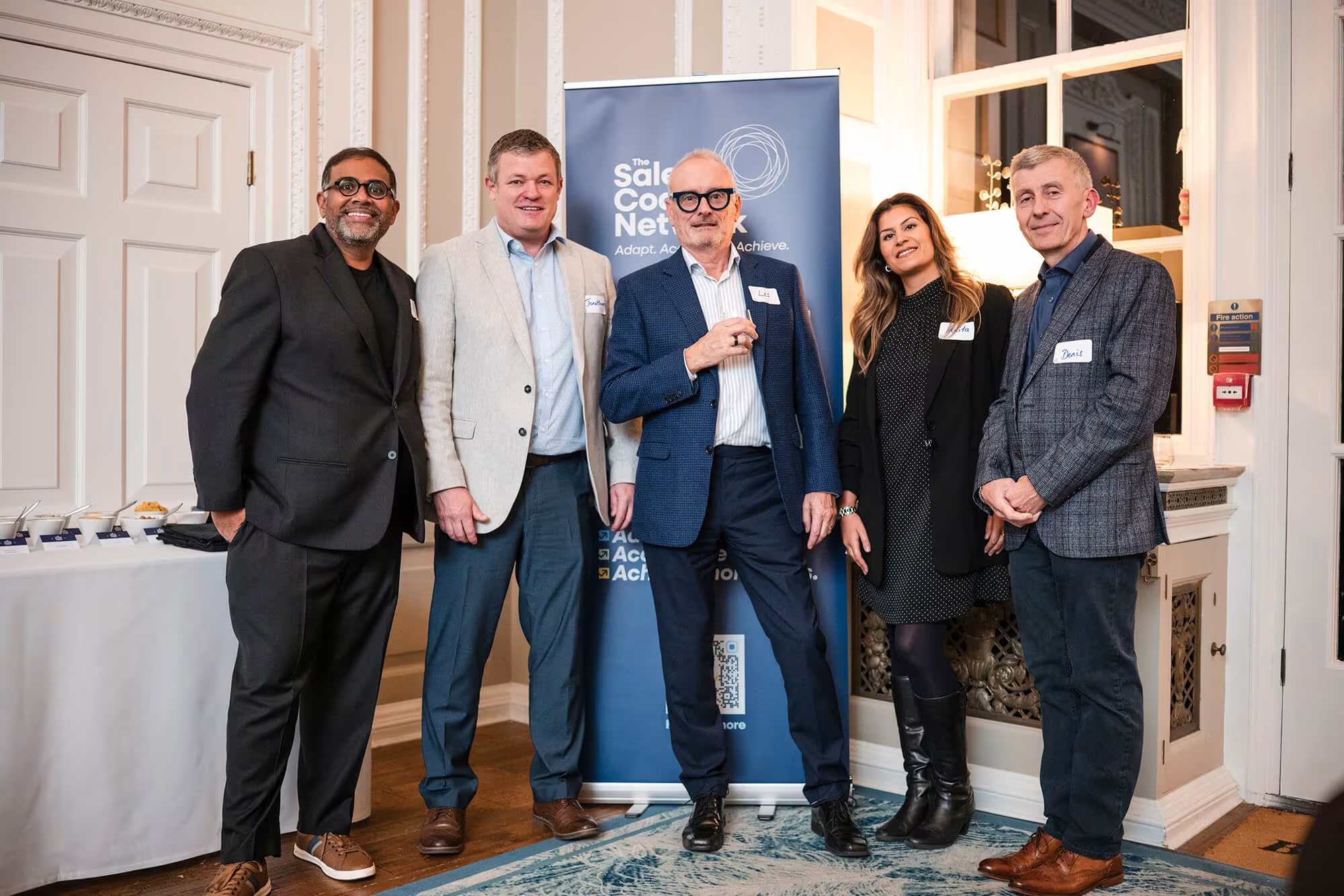
Every coach in The Sales Coach Network has carried a target, led a team, or built a commercial function from the ground up, so the guidance your people get is grounded in real selling, not a playbook.
We match each coach to your context, then they work alongside you or your team on live deals and real conversations. That’s the difference between a 'presenter' or trainer who delivers a monologue and a practitioner who helps your people change how they sell.
FAQs about Sales Coaching
Training teaches new skills and frameworks to a group. Coaching reinforces those skills on real, live deals over time, adapting to each individual and each opportunity. Training builds the capability; coaching is what embeds it.
Yes. Coaching runs remotely over Zoom.
It depends on the underlying capability. If the skills are already there and the issue is consistent execution, coaching can start straight away. If the foundations aren’t in place, having training first makes coaching far more effective.
Most engagements run over several months so behaviours have time to embed, with the exact cadence agreed around your team’s needs and workload.
Through business outcomes, not attendance: win rate, average deal size, cycle length, forecast confidence, and the adoption of new behaviours on live deals.
Either. Coaching can be brought in on its own for specific people or deals, or run as the reinforcement layer inside a wider initiative.
It depends on the type of coaching, the number of people, and the cadence. The cards above give indicative ranges. A scoping conversation will allow us to give a clearer investment guideline.

See how we’d work with you
See exactly how we could scope, coach, and embed lasting sales capability with your team.