Sales Performance
Role of Sales Performance Metrics in Predictable Growth
The Sales Coach Network8 min read


Only 25 percent of organisations have standardised sales metric definitions, a gap that can seriously hinder growth in any british business environment. When sales teams rely on myths or unclear measurements, they miss opportunities for real improvement and long-term success. This article reveals how understanding and applying the right sales performance metrics—beyond basic numbers—shapes smarter strategy, eliminates costly misconceptions, and drives effective change within every british sales organisation.
Table of Contents
Key Takeaways
Point | Details |
Standardisation of Metrics | Only 25% of organisations have standard definitions for sales metrics, hindering their growth strategies. |
Transforming Metrics into Insights | Successful sales teams treat metrics as dynamic tools for learning, allowing for targeted development and performance improvement. |
Avoiding Vanity Metrics | Focusing on profit-driven metrics rather than superficial indicators is crucial for meaningful performance enhancement. |
Leadership’s Role | Effective leadership is essential in establishing unified metric definitions, fostering a culture of accountability and continuous learning. |
Defining Sales Performance Metrics and Myths
Sales performance metrics represent critical measurements that enable organisations to understand, track, and improve their revenue generation capabilities. Only 25% of organisations currently have standardised definitions for sales metrics, which significantly hampers their ability to develop predictable growth strategies.
Beyond basic measurement, effective sales metrics must transcend simplistic numerical tracking. They represent nuanced indicators of organisational health, revealing not just what happened, but why and how sales performance can be systematically enhanced. Key performance indicators (KPIs) should illuminate multiple dimensions: pipeline quality, deal velocity, win rates, average deal value, and customer acquisition costs.
Many sales leaders perpetuate dangerous myths that undermine strategic metric implementation. Common misconceptions include believing only extroverts can succeed in sales and that multitasking represents an essential skill. Such myths create problematic frameworks that prevent teams from developing disciplined, data-driven approaches to sales performance improvement.
Successful sales organisations recognise that metrics are not punitive tools, but strategic insights. They view performance data as a collaborative mechanism for understanding team capabilities, identifying skill gaps, and creating targeted development programmes. The most sophisticated sales teams transform metrics from passive reporting into active coaching tools that drive continuous organisational learning and revenue acceleration.
Types of Metrics and Their Distinct Roles
Performance metrics are categorically structured to address different organisational needs, providing nuanced insights into various aspects of business functionality. These metrics can be broadly classified into four primary domains: business performance, employee performance, sales performance, and project management metrics. Each category serves a unique purpose in helping leaders understand and optimise organisational effectiveness.
Sales reporting dashboards further illustrate this complexity, with distinct analytical frameworks including operational, tactical, strategic, and performance dashboards. Operational metrics focus on immediate, day-to-day activities, tracking real-time sales interactions and individual representative performance. Tactical metrics provide mid-term insights, examining team-level performance and quarterly trends. Strategic metrics offer long-term perspective, connecting sales activities to broader organisational goals and revenue trajectories.
Within sales performance metrics, critical subcategories emerge that provide comprehensive insights. These include leading indicators (predictive metrics like pipeline volume and conversion rates) and lagging indicators (historical performance measurements such as total revenue and win rates). Advanced organisations integrate both perspectives, creating a holistic view that enables proactive strategy development and continuous performance refinement.
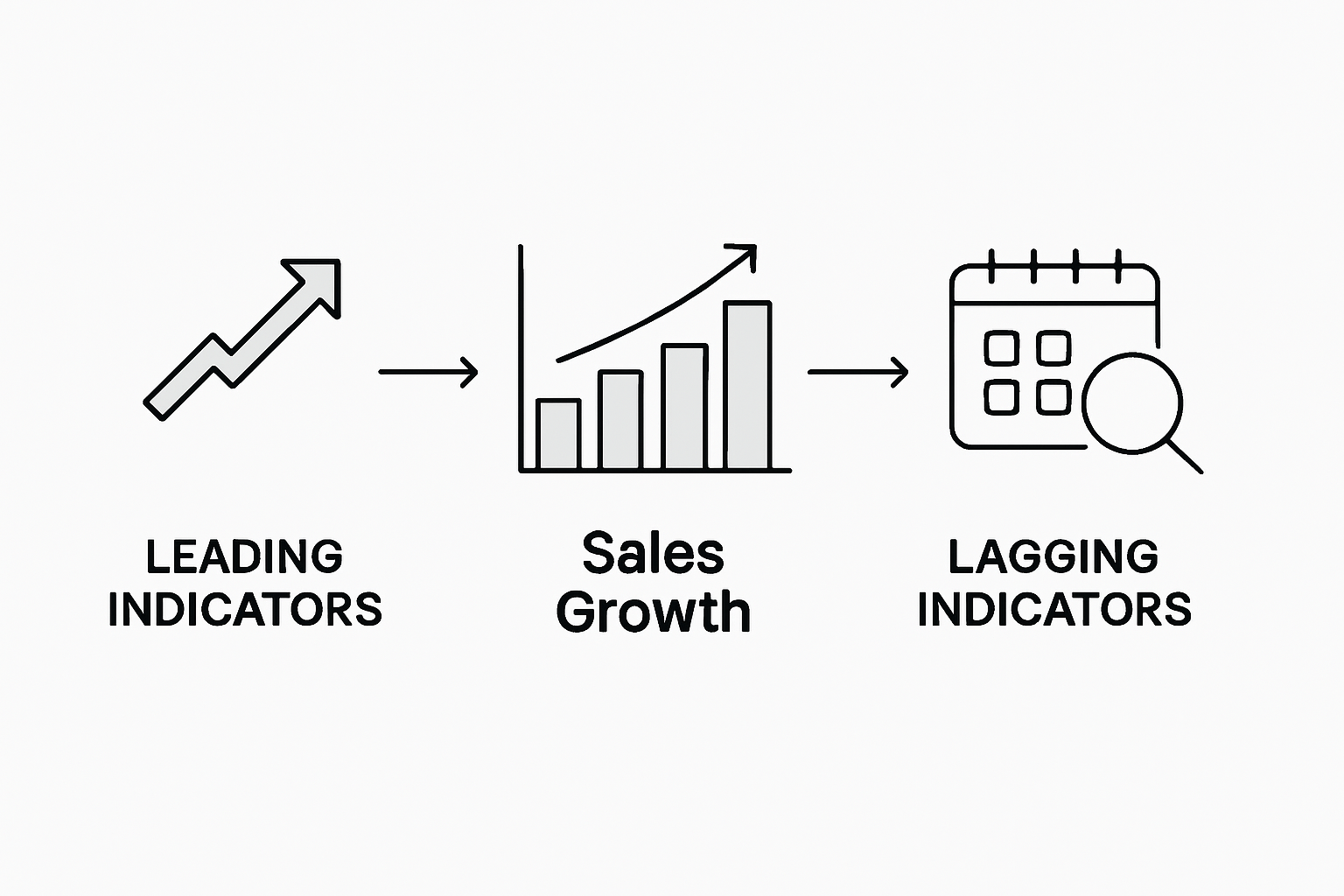
The most sophisticated sales teams understand that metrics are not mere numerical representations but strategic tools for organisational learning. They leverage these metrics to create targeted development programmes, identify skill gaps, and build data-driven coaching frameworks. By treating metrics as dynamic, interconnected insights rather than static reports, progressive sales leaders transform performance tracking from a compliance exercise into a powerful mechanism for sustained revenue growth.
How Metrics Drive Revenue and Team Behaviour
Focusing on profit metrics over vanity metrics enables organisations to make data-driven decisions that directly transform team behaviour and revenue generation strategies. Effective metrics act as powerful behavioural nudges, guiding sales representatives towards activities that create genuine commercial value rather than superficial achievements.

Sales performance metrics serve as sophisticated navigation systems that align individual actions with organisational objectives. Strategic sales dashboards facilitate data-driven decision-making and streamline cross-functional collaboration, creating a transparent environment where performance expectations are clear and measurable. By establishing precise, trackable indicators, organisations can create a culture of accountability and continuous improvement.
The psychological impact of metrics on team behaviour cannot be overstated. When sales representatives understand exactly how their actions contribute to broader organisational goals, they become more motivated and strategically focused. Metrics that reward meaningful outcomes like customer lifetime value, quality of pipeline, and sustainable revenue growth fundamentally reshape individual and collective performance mindsets.
Ultimately, sophisticated sales organisations recognise that metrics are not punitive tools but collaborative frameworks for organisational learning. By designing metrics that balance leading and lagging indicators, leaders can create holistic performance ecosystems that encourage innovation, reward strategic thinking, and drive predictable, sustainable revenue growth. The most successful teams view metrics as dynamic insights that continuously evolve to reflect changing market conditions and organisational priorities.
Common Pitfalls and Metrics Misuse Risks
The lack of standardised sales metrics definitions can lead to significant confusion and erroneous decision-making within organisations. Without clear, consistent measurement frameworks, sales teams risk creating parallel universes of interpretation where each team member understands performance metrics differently, fundamentally undermining strategic alignment and collaborative effectiveness.
Vanity metrics represent perhaps the most insidious risk in sales performance tracking. Organisations frequently fall into the trap of relying on metrics that appear impressive but contribute little to actual profitability. These superficial indicators might include total lead volume, social media engagement, or raw contact numbers that create an illusion of progress while masking underlying performance weaknesses.
Additional critical risks emerge when metrics become punitive rather than developmental tools. When sales representatives perceive metrics as weapons for criticism instead of guidance for improvement, they develop defensive behaviours that actively undermine organisational learning. This can manifest through data manipulation, sandbagging, or deliberate misrepresentation of performance to protect individual standings.
The most sophisticated sales organisations understand that metrics are living, dynamic systems requiring constant refinement. They create feedback loops that continuously validate and recalibrate performance indicators, ensuring metrics remain relevant, motivational, and aligned with evolving business strategies. By treating metrics as collaborative insights rather than rigid enforcement mechanisms, progressive teams transform potential risks into opportunities for genuine performance enhancement.
Leadership Accountability and Embedding Best Practice
Leadership must establish unified sales metrics definitions to enhance the effectiveness of sales analytics and drive commercial success. This requires a deliberate, strategic approach that transforms metrics from passive reporting tools into active mechanisms for organisational learning and performance improvement.
Strategic leadership fundamentally involves creating transparent, consistent frameworks that align individual performance with broader organisational objectives. Leaders should prioritise profit metrics to ensure marketing strategies are directly connected to financial outcomes, fostering a culture of genuine accountability rather than superficial achievement tracking.
Embedding best practices demands more than simple metric implementation. Successful leaders create comprehensive ecosystems where performance measurement becomes a collaborative, developmental process. This involves designing metrics that balance quantitative performance indicators with qualitative insights, encouraging continuous learning, innovation, and adaptive strategies that respond dynamically to evolving market conditions.
The most sophisticated sales leaders understand that accountability is not about punishment, but about creating supportive environments where teams can understand their performance, identify growth opportunities, and develop meaningful skills. By treating metrics as living, evolving tools for organisational development, progressive leadership transforms traditional performance tracking into a powerful mechanism for sustained commercial growth and team empowerment.
Unlock Predictable Growth with Strategic Sales Metrics
The challenges outlined in the article underscore the frustration many senior revenue leaders face: unpredictable revenue, low win rates, and sluggish sales cycles caused by unclear or misused sales performance metrics. Your teams need more than raw data they misunderstand — they require holistic measurement systems that identify pipeline quality, accelerate deal velocity, and enhance win rates to drive revenue predictability. This is exactly where The Sales Coach Network excels.
We partner with B2B organisations to embed scalable, practical sales operating systems designed for complex environments that want to move beyond generic training. By aligning with your commercial objectives, coaching your leaders to adopt data-driven disciplines, and applying proprietary frameworks like our Sales Ecosystem Framework, we transform metrics into actionable insights. This builds motivated, accountable teams focused on sustainable growth without falling into vanity metric traps.
Ready to turn your sales metrics into powerful growth engines? Explore how our bespoke sales coaching and leadership training solutions can eliminate the guesswork holding your team back. Visit The Sales Coach Network now and empower your sales organisation to adapt, accelerate, and achieve measurable success.
Frequently Asked Questions
What are sales performance metrics?
Sales performance metrics are critical measurements that organisations use to track, understand, and improve their revenue generation capabilities. They provide insights into various aspects of sales activities and help foster predictable growth strategies.
How can sales metrics improve team performance?
Sales metrics, when used effectively, serve as strategic insights that identify skill gaps, track individual and team performance, and develop targeted coaching programs. They transform performance tracking into a mechanism for continuous improvement and accountability.
What are the consequences of relying on vanity metrics?
Relying on vanity metrics can lead organizations to focus on superficial achievements that do not drive actual profitability. This can create an illusion of success while masking underlying performance issues that need attention.
Why is leadership accountability important in sales metrics?
Leadership accountability is essential in establishing consistent definitions and frameworks for sales metrics. This fosters a culture of genuine accountability and ensures that all team members work towards aligned objectives, enhancing overall sales effectiveness.
Recommended