
The Essential Guide to Measuring Sales Effectiveness
- The Sales Coach Network
- Nov 29, 2025
- 6 min read


Most british sales leaders agree that tracking numbers alone does not capture true performance. In a world where competition grows fiercer each year, only measuring revenue fails to reveal hidden gaps or lost opportunities. Research shows that firms using detailed effectiveness metrics outperform their peers by nearly 30 percent. Understanding what drives success at every stage of the sales cycle helps organisations translate raw data into smarter strategies that power ongoing revenue growth.
Table of Contents
Key Takeaways
Point | Details |
Sales Effectiveness Measurement | Involves evaluating a sales team’s ability to convert opportunities into revenue, requiring collaboration between sales and marketing. |
Critical Performance Metrics | Key performance indicators should align with organisational goals to provide actionable insights and monitor performance effectively. |
Risks of Neglect | Failing to measure sales effectiveness can lead to strategic, operational, and financial vulnerabilities that hinder growth. |
Best Practices for Growth | Sustainable revenue growth requires strategic alignment, continuous improvement, and holistic performance management across the organisation. |
What Is Sales Effectiveness Measurement?
Sales effectiveness represents the strategic capacity of a sales organisation to win opportunities and secure business under optimal terms and timelines. According to Wikipedia, it fundamentally measures a sales professional’s ability to ‘win’ at each critical stage of the customer’s buying process.
At its core, sales effectiveness measurement involves systematically evaluating how successfully sales teams convert potential opportunities into actual revenue. This goes far beyond simple revenue tracking, requiring a nuanced understanding of multiple performance dimensions. As research from IJERT highlights, key performance indicators (KPIs) should be straightforward, essential, and genuinely useful to stakeholders.
Effective sales effectiveness measurement typically encompasses several critical dimensions:
Conversion rates at different sales pipeline stages
Average deal size and value
Sales cycle duration
Win rates across different market segments
Quality of prospect qualification
Customer acquisition costs
Successful measurement requires close collaboration between sales and marketing teams to continuously refine knowledge, messaging, skills, and strategies. The goal is not just measurement, but ongoing performance improvement that transforms raw data into actionable insights Sales Coach Network.
Key Metrics and Performance Indicators
Key performance indicators (KPIs) serve as the critical navigational instruments for measuring sales effectiveness, providing revenue leaders with granular insights into team performance and strategic opportunities. Sales performance metrics allow organisations to transform raw data into actionable intelligence, enabling precise tracking and continuous improvement.
According to research from Journals, selecting KPIs requires careful alignment with specific organisational goals and objectives. Not all metrics carry equal weight, and sophisticated sales leaders understand the importance of choosing indicators that genuinely reflect performance potential.
Critical sales performance metrics include:
Revenue Generation Metrics
Total revenue
Revenue growth rate
Average deal size
Win rate percentage
Productivity Metrics
Sales activity volume
Calls per day
Meetings scheduled
Proposals submitted
Efficiency Metrics
Sales cycle length
Customer acquisition cost
Conversion rates
Pipeline velocity
By systematically tracking these metrics, sales leaders can diagnose performance bottlenecks and opportunities in our comprehensive guide on value-based selling, ensuring continuous strategic refinement of sales approaches.

Diagnostic Frameworks in Modern Sales
Diagnostic frameworks represent sophisticated methodological approaches that enable sales organisations to systematically analyse, understand, and improve their sales performance. These comprehensive systems go beyond simple measurement, providing deep insights into the complex dynamics of sales team effectiveness and organisational revenue generation.
According to research from the Journal of Personal Selling & Sales Management, diagnostic frameworks are critical for evaluating multiple dimensions of sales performance, including motivation, compensation strategies, and the effectiveness of diverse selling approaches. Modern diagnostic frameworks typically integrate several interconnected assessment methodologies.
Key components of comprehensive sales diagnostic frameworks include:
Structural Analysis
Organisational sales architecture
Reporting hierarchies
Incentive structures
Role definition and responsibilities
Performance Evaluation
Individual and team metrics
Competency assessments
Skills gap identification
Performance benchmarking
Behavioural Diagnostics
Sales interaction quality
Customer engagement patterns
Communication effectiveness
Relationship management skills
Leaders seeking to implement robust diagnostic approaches can explore our comprehensive sales leadership training framework, which provides actionable strategies for developing sophisticated performance assessment mechanisms.
Risks of Neglecting Effectiveness Measurement
Performance measurement negligence represents a critical strategic vulnerability that can silently erode an organisation’s competitive positioning and revenue potential. When sales leaders fail to implement robust effectiveness measurement systems, they inadvertently create an environment of operational blindness, where critical performance insights remain hidden and unaddressed.
According to Wikipedia’s analysis of sales effectiveness, neglecting sales effectiveness measurement is far more than a departmental issue — it becomes a company-wide challenge that can fundamentally undermine organisational performance. The consequences extend beyond immediate sales metrics, potentially disrupting strategic alignment between sales, marketing, and broader business objectives.
The specific risks of measurement negligence include:
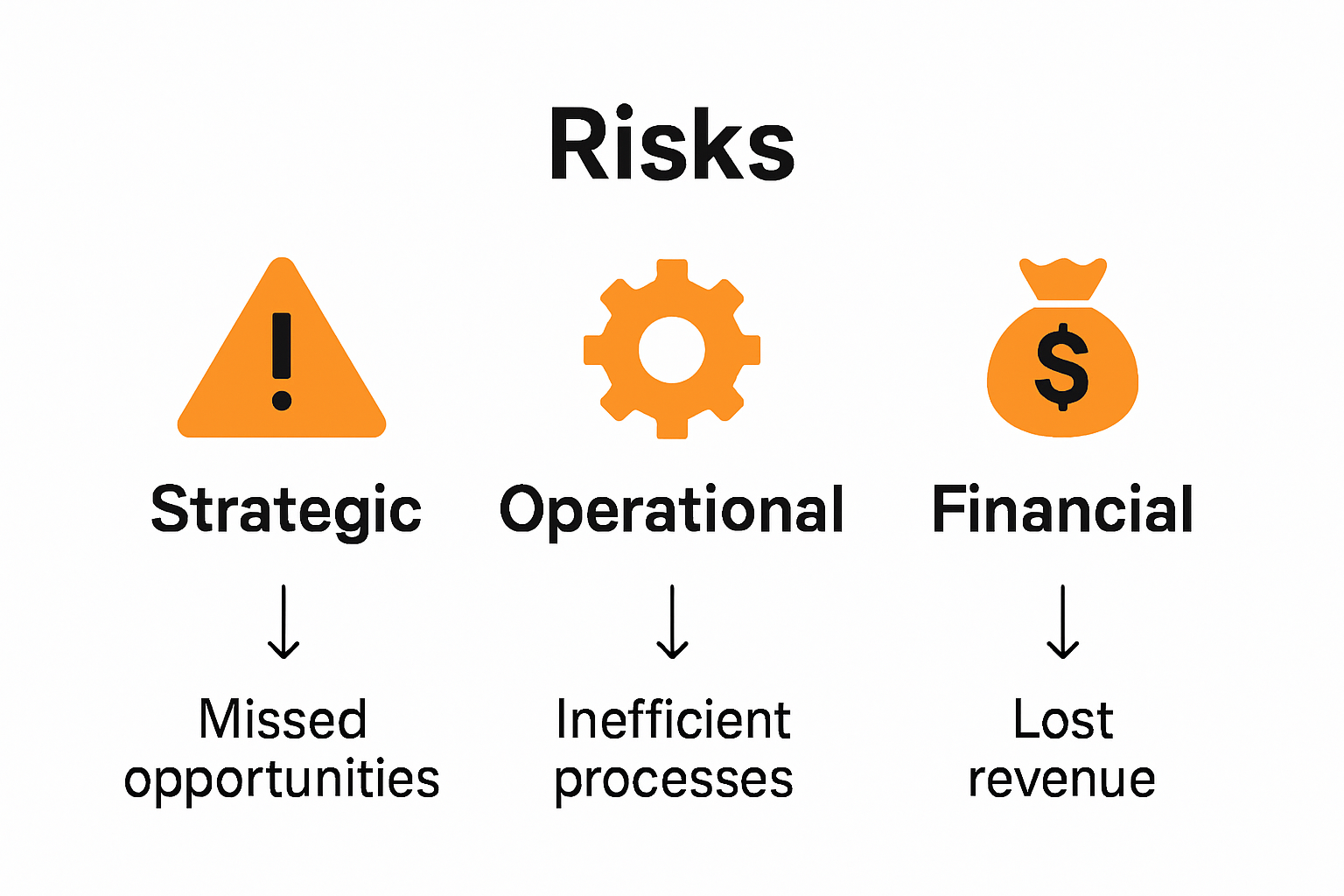
Strategic Risks
Inability to identify performance gaps
Lack of data-driven decision making
Reduced competitive responsiveness
Ineffective resource allocation
Operational Risks
Obscured team performance insights
Missed opportunity for skill development
Inefficient sales process management
Limited understanding of pipeline dynamics
Financial Risks
Unpredictable revenue streams
Increased customer acquisition costs
Reduced sales team productivity
Diminished market competitiveness
Sales leaders seeking to mitigate these risks can explore our comprehensive sales team accountability guide, which provides strategic frameworks for maintaining rigorous performance measurement and management.
Best Practices for Sustainable Revenue Growth
Sustainable revenue growth represents a strategic imperative for organisations seeking long-term success in competitive markets. This approach transcends traditional short-term sales tactics, focusing instead on developing robust, repeatable systems that consistently generate predictable revenue streams.
According to research from MDPI, achieving sustainable revenue growth requires routine data collection and systematic benchmarking. The most successful organisations implement comprehensive performance monitoring mechanisms that enable continuous learning, adaptation, and strategic refinement.
Key best practices for sustainable revenue growth include:
Strategic Alignment
Clear organisational revenue objectives
Integrated sales and marketing strategies
Consistent performance benchmarking
Alignment of incentive structures
Continuous Improvement
Regular performance diagnostics
Skills development programmes
Data-driven decision making
Agile performance management
Holistic Performance Management
Comprehensive KPI tracking
Individual and team performance analysis
Proactive skill gap identification
Cultural emphasis on learning
Leaders committed to implementing these strategies can explore our comprehensive sales training best practices, which provide actionable frameworks for driving sustainable organisational growth.
Unlock Predictable Growth Through Proven Sales Effectiveness Measurement
If you are tired of unpredictable revenue, stalled deals and inconsistent team performance the insights from “The Essential Guide to Measuring Sales Effectiveness” make one thing clear: without disciplined, data-driven sales effectiveness measurement your organisation risks strategic blindness and lost opportunities. Key pain points like long sales cycles low win rates and inefficient resource allocation demand a systematic approach that goes beyond basic metrics to comprehensive sales diagnostics and continuous improvement.
At The Sales Coach Network we specialise in embedding scalable sales operating systems tailored for complex B2B sales teams. Our holistic methodology addresses the critical dimensions highlighted in the guide including conversion rates deal velocity and qualification rigour. From bespoke sales training programmes to targeted leadership development and practical coaching frameworks we equip revenue leaders with the tools to transform measurement into measurable sustainable revenue growth. Discover how you can reduce sales cycle times increase average deal values and consistently close more deals by partnering with experts who fix systemic issues rather than offering one-off fixes.
Ready to stop guessing and start growing with confidence Explore our proven frameworks and practical solutions at The Sales Coach Network to make sales effectiveness measurement a competitive advantage in your organisation today.
Frequently Asked Questions
What is sales effectiveness measurement?
Sales effectiveness measurement involves systematically evaluating how successfully sales teams convert potential opportunities into actual revenue. It assesses various performance dimensions beyond just revenue tracking.
Why are key performance indicators (KPIs) important in measuring sales effectiveness?
KPIs provide critical insights into team performance and strategic opportunities, enabling sales leaders to track progress, identify performance gaps, and make data-driven decisions.
What are some essential metrics for measuring sales performance?
Important metrics include total revenue, sales cycle length, win rates, conversion rates, and customer acquisition costs, which help in diagnosing performance and improving sales strategies.
What are the risks of neglecting sales effectiveness measurement?
Neglecting sales effectiveness measurement can lead to strategic risks such as inability to identify performance gaps, operational risks like obscured team performance insights, and financial risks including unpredictable revenue streams.
Recommended