Sales Management
Sales Coaching for Managers: Complete Expert Guide
The Sales Coach Network10 min read


Over 65 percent of british sales managers report that coaching directly improves both team morale and sales results. In a fast-changing business world, leadership strategies that go beyond routine supervision make a real difference. Sales coaching offers a proven way for british managers to build confidence and drive consistent performance, while creating stronger, more motivated teams. This article reveals what makes coaching so effective and how managers can use these methods for lasting improvement.
Table of Contents
Key Takeaways
Point | Details |
Importance of Sales Coaching | Sales coaching empowers managers to enhance team performance through personalised development rather than traditional oversight. |
Core Objectives | Key goals include building confidence, addressing performance gaps, and fostering a culture of continuous learning. |
Essential Skills | Successful coaching requires active listening, effective questioning, and emotional intelligence to support individual growth. |
Avoiding Pitfalls | Managers should focus on specific feedback and maintain consistency to prevent generic guidance from undermining development efforts. |
Role Of Sales Coaching For Managers
Sales coaching represents a transformative approach that empowers managers to develop, motivate, and elevate their sales teams beyond traditional management techniques. Unlike generic performance reviews or top-down directives, sales coaching is a strategic, personalised method of developing individual and team potential through targeted guidance and skill enhancement.
According to the British Council, adopting a coaching management style creates significant organisational benefits. This approach enhances psychological safety within teams, leading to increased trust, reduced stress, and higher productivity. Sales managers who implement coaching techniques can effectively create environments where team members feel genuinely valued and intrinsically motivated to perform at their best.
The core objectives of sales coaching for managers include:
Developing individual sales representative skills
Identifying and addressing performance gaps
Building confidence and professional capabilities
Creating a culture of continuous learning and improvement
Driving consistent sales team performance
Drawing insights from University of Cambridge’s Institute of Continuing Education, effective sales coaching aims to raise team confidence, motivation, and engagement. This approach fosters a proactive attitude that translates directly into higher performance. By focusing on personalised development rather than generic training, managers can unlock their team’s potential and create sustainable growth strategies.
Successful sales coaching requires managers to transition from traditional supervisory roles to becoming developmental partners. This means moving beyond performance metrics to understanding each team member’s unique strengths, challenges, and aspirational goals. The most impactful sales coaches view their role as enablers who provide strategic guidance, constructive feedback, and personalised support to help their representatives continuously evolve and excel.
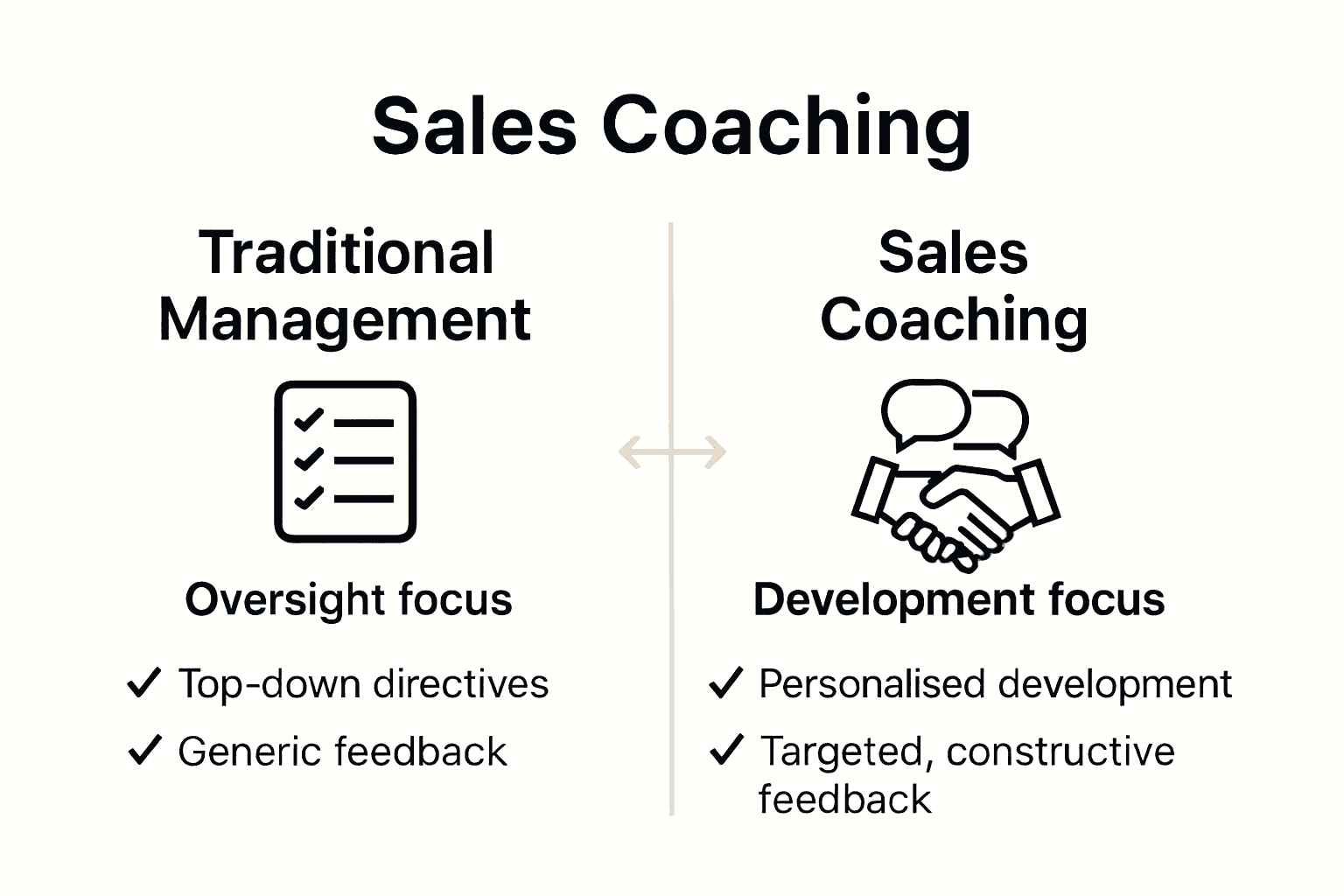
Implementing a robust sales coaching framework demands commitment, emotional intelligence, and a genuine desire to support individual growth. Managers must develop active listening skills, create safe environments for open dialogue, and design tailored coaching interventions that address specific performance needs. By investing in comprehensive coaching strategies, organisations can transform their sales teams from merely functional units into high-performing, adaptable, and motivated professional networks.
Key Sales Coaching Models Explained
Sales coaching models provide systematic frameworks that enable managers to develop, support, and enhance their sales team’s performance through structured methodological approaches. These models offer strategic pathways for transforming traditional management practices into dynamic, personalised developmental strategies that drive individual and collective sales excellence.
One pioneering approach in this domain is Systemic Team Coaching, as described by Wikipedia. Developed by Peter Hawkins, this model transcends traditional coaching by viewing the sales team as an integrated part of a broader organisational ecosystem. Unlike conventional methods that focus solely on individual performance, systemic team coaching emphasises collective leadership and comprehensive stakeholder engagement to create sustainable value and organisational growth.
Key sales coaching models typically encompass several critical dimensions:
Performance Coaching Model: Focuses on immediate performance improvement
Developmental Coaching Model: Emphasises long-term skill enhancement
Transformational Coaching Model: Targets fundamental behavioural and mindset changes
Adaptive Coaching Model: Provides flexible approaches tailored to individual team member needs
Systemic Coaching Model: Integrates team performance within broader organisational contexts
Successful sales coaching models share several fundamental characteristics. They prioritise active listening, provide constructive feedback, establish clear performance expectations, and create supportive environments that encourage continuous learning. Effective models move beyond traditional top-down management approaches, instead fostering collaborative relationships where managers act as mentors and facilitators of professional growth.
The most sophisticated sales coaching models integrate diagnostic tools, performance metrics, and personalised development plans. They recognise that each sales representative has unique strengths, challenges, and learning styles. By combining data-driven insights with empathetic, targeted coaching techniques, managers can design interventions that not only improve individual performance but also enhance overall team effectiveness and organisational resilience.

Ultimately, choosing the right sales coaching model depends on understanding your team’s specific dynamics, organisational culture, and strategic objectives. The most impactful approaches are those that remain flexible, adaptive, and genuinely committed to supporting sales professionals’ holistic development and potential.
Essential Skills For Effective Coaching
Effective sales coaching transcends traditional management approaches, requiring a nuanced set of interpersonal and strategic skills that enable managers to unlock their team’s full potential. The most successful coaching strategies are built upon a foundation of sophisticated communication techniques, emotional intelligence, and a genuine commitment to individual and collective team development.
According to the Guildhall School of Music & Drama, three core competencies are critical for managers seeking to establish a robust coaching culture: active listening, effective questioning, and constructive feedback. These skills form the cornerstone of transformative coaching, allowing managers to create meaningful dialogues that inspire growth, challenge assumptions, and support individual learning trajectories.
Key essential skills for effective sales coaching include:
Deep empathetic understanding
Powerful communication capabilities
Strategic performance analysis
Adaptable coaching methodologies
Emotional intelligence
Data-driven performance insights
Continuous learning orientation
Drawing insights from the University of Cambridge, successful coaching approaches often leverage structured frameworks like the GROW model (Goals, Reality, Options, Will). This methodology provides managers with a systematic approach to guiding team members through professional development challenges, ensuring conversations remain focused, productive, and aligned with broader organisational objectives.
Mastering these essential coaching skills requires deliberate practice and a commitment to personal growth. Exceptional sales coaches view their role not as supervisors, but as developmental partners who create environments of psychological safety, trust, and mutual respect. By developing a comprehensive toolkit of communication techniques, diagnostic skills, and empathetic understanding, managers can transform traditional performance management into a dynamic, collaborative journey of continuous improvement.
Ultimately, effective sales coaching is an intricate blend of art and science. It demands managers balance analytical performance tracking with genuine human connection, creating coaching experiences that are both technically rigorous and deeply supportive. The most successful coaches understand that their primary objective is not merely to improve sales metrics, but to cultivate resilient, self-motivated professionals capable of navigating complex sales landscapes with confidence and creativity.
Embedding Coaching Into Sales Teams
Embedding a coaching culture within sales teams represents a strategic transformation that goes far beyond traditional training approaches. It requires a holistic reimagining of organisational dynamics, leadership practices, and individual development pathways that prioritise continuous learning, adaptability, and collaborative growth.
According to Imperial College London, successful embedding of coaching requires leaders to integrate coaching skills directly into their management approach. This ‘Leader as Coach’ philosophy transforms managers from mere supervisors into developmental partners who actively foster a culture of continuous improvement, collaboration, and personal accountability.
Key strategies for embedding coaching into sales teams include:
Creating structured coaching time within regular workflows
Developing standardised coaching frameworks
Implementing regular performance feedback mechanisms
Establishing mentorship programmes
Encouraging peer-to-peer learning environments
Integrating coaching metrics into performance evaluations
Providing ongoing coaching skills training for managers
Furza emphasises the critical importance of hands-on, localised coaching approaches that ensure sales team members are comprehensively prepared and intrinsically motivated. By designing targeted, contextualised coaching interventions, organisations can significantly enhance team performance, adaptability, and confidence.
Successful embedding of coaching requires a multifaceted approach that addresses systemic organisational barriers. This involves breaking down hierarchical silos, creating psychologically safe environments, and developing a shared language of professional development. Managers must become skilled facilitators who can navigate complex interpersonal dynamics while maintaining clear performance expectations.
Ultimately, embedding coaching is not a one-time initiative but a sustained cultural transformation. It demands unwavering commitment from leadership, investment in continuous learning infrastructure, and a genuine belief in the potential of every team member. The most successful organisations view coaching not as a programme, but as a fundamental approach to human capital development that drives innovation, resilience, and sustainable competitive advantage.
Common Pitfalls And How To Avoid Them
Sales coaching is a complex endeavour fraught with potential missteps that can undermine even the most well-intentioned developmental efforts. Understanding and proactively addressing these common pitfalls is crucial for managers seeking to create meaningful, transformative coaching experiences that genuinely elevate team performance.
One of the most significant challenges in sales coaching is the tendency towards superficial, generic feedback rather than targeted, individualised developmental guidance. Managers frequently fall into the trap of providing broad, non-specific commentary that fails to address specific performance nuances or individual learning needs. This approach not only diminishes the coaching’s effectiveness but can also lead to decreased team motivation and engagement.
Key pitfalls in sales coaching include:
Inconsistent coaching frequency and commitment
Over-reliance on generic performance metrics
Lack of personalised developmental strategies
Insufficient psychological safety in coaching conversations
Minimal focus on skill-building and capability development
Reactive instead of proactive coaching approaches
Inadequate performance tracking and follow-up
Managers must be vigilant about avoiding these common coaching traps by developing a sophisticated, nuanced approach to team development. This requires cultivating deep self-awareness, maintaining genuine curiosity about individual team member’s potential, and creating structured yet flexible coaching frameworks that adapt to unique organisational and individual contexts.
Successful sales coaches recognise that effective coaching is fundamentally about building trust, creating safe spaces for honest dialogue, and supporting genuine professional growth. This means moving beyond traditional performance management paradigms and embracing a more holistic, human-centric approach to development. Managers must become adept at balancing constructive challenge with empathetic support, creating environments where team members feel simultaneously stretched and supported.
Ultimately, avoiding coaching pitfalls demands continuous learning, humility, and a commitment to personal and professional growth. The most effective sales leaders view coaching not as a predetermined script or rigid methodology, but as a dynamic, collaborative journey of mutual discovery and potential realisation. By maintaining flexibility, practicing active listening, and remaining genuinely invested in their team’s success, managers can transform potential coaching challenges into powerful opportunities for individual and collective development.
Unlock Your Sales Team’s Potential with Expert Coaching Support
The article highlights the challenges sales managers face when shifting from traditional supervisory roles to becoming true developmental partners. You may be recognising pain points such as inconsistent coaching efforts, generic feedback, and the difficulty of embedding a coaching culture that truly drives continuous improvement and measurable revenue growth. These issues can stall your team’s confidence, motivation, and ultimately sales performance.
At The Sales Coach Network, we specialise in addressing these exact challenges through practical, sustainable strategies that transform sales teams. By integrating tailored sales leadership training with ongoing sales coaching services, we enable managers to develop essential skills like active listening and personalised feedback. Our proven methodologies, including leadership sales coaching frameworks and the Sales Accelerator Method, ensure coaching becomes a discipline embedded into your sales ecosystem, not just a one-off event.
Are you ready to move beyond generic training and create a culture of accountability and growth that accelerates pipeline development and win rates? Discover how our expert practitioners can partner with your team to embed effective sales coaching and deliver predictable, scalable revenue. Learn more about our tailored Sales Coaching Services and how Sales Training For Managers can equip your managers with the tools to sustain change. Take the next step now on The Sales Coach Network and start transforming your sales leadership approach today.
Frequently Asked Questions
What is the role of sales coaching in manager development?
Sales coaching empowers managers to develop, motivate, and elevate their sales teams by providing targeted guidance and fostering individual potential, rather than relying solely on traditional management techniques.
How do effective sales coaching techniques benefit team performance?
Effective sales coaching techniques enhance psychological safety, build trust, reduce stress, and increase productivity among team members, leading to improved team performance and consistent sales results.
What essential skills should managers possess for effective sales coaching?
Key skills for effective sales coaching include active listening, effective questioning, emotional intelligence, and the ability to provide constructive feedback while fostering a culture of continuous learning and personal development.
How can coaching be embedded into a sales team culture?
Embedding coaching into a sales team culture requires integrating coaching skills into managerial practices, creating structured coaching time in workflows, providing ongoing training, and facilitating open communication that promotes continuous improvement.
Recommended