
Strategic Sales Opportunity Creation Guide for B2B Leaders
- The Sales Coach Network
- Jan 4
- 7 min read


More than one in three british B2B sales pipelines never reach maturity due to weak opportunity generation and inconsistent qualification. For CROs and VPs of Sales navigating the competitive British IT and professional services sector, scrambling for reliable new business often means wasted effort and stalled growth. This guide shares proven steps to define commercial direction, target ideal accounts, and validate pipeline quality so your team can win opportunities with confidence every quarter.
Table of Contents
Quick Summary
Key Insight | Clarification |
1. Define a clear commercial direction | Establishing a precise direction helps transform abstract goals into actionable strategies for revenue growth. |
2. Prioritise high-value target accounts | Create a tiering system using weighted scores to focus resources on accounts with the highest engagement potential. |
3. Employ consultative selling techniques | Shift towards understanding client needs through active listening to create long-term partnerships instead of transactional relations. |
4. Use advanced qualification criteria | Implement a multidimensional evaluation model to systematically identify high-potential sales opportunities for improved efficiency. |
5. Validate pipeline readiness regularly | Regularly assess pipeline health using structured methodologies to ensure genuine progression towards revenue goals. |
Step 1: Define commercial direction for opportunity generation
Successful B2B sales leaders recognise that strategic opportunity generation starts with defining a precise commercial direction. This foundational process transforms abstract goals into actionable strategies that drive meaningful revenue growth.
To establish a robust commercial direction, begin by comprehensively mapping market potential and strategic opportunities through rigorous analysis. This involves understanding your target market segments, identifying emerging customer pain points, and aligning your sales approach with genuine business value. Conduct deep research into your ideal customer profiles, examining their specific challenges, investment patterns, and strategic priorities.
Your commercial direction should articulate clear parameters for opportunity creation. This means developing specific criteria for qualifying potential sales pursuits, establishing ideal customer characteristics, and creating frameworks that enable your sales team to focus energy on high probability engagements. Systematic qualification processes help prevent wasted resources on low potential opportunities by introducing discipline and strategic thinking into your sales approach.
Professional suggestion: Develop a structured scoring mechanism that objectively evaluates potential sales opportunities against predefined commercial criteria to enhance your opportunity generation strategy.
Step 2: Identify target accounts and prioritise outreach
Successful B2B sales leaders understand that strategic account targeting requires a methodical approach to identifying and prioritising potential high-value clients. This step transforms broad market potential into a focused, actionable strategy for intelligent outreach.
Begin by developing a comprehensive Ideal Customer Profile that leverages data intelligence tools to systematically segment potential accounts. This involves analysing firmographic attributes, technographic capabilities, previous investment patterns, and organisational structures that align with your solution’s value proposition. Examine factors such as company size, industry vertical, technological infrastructure, growth trajectory, and demonstrated propensity for strategic investments.

Prioritise your target accounts by creating a sophisticated tiering system that objectively evaluates potential opportunities. Assign weighted scores based on multiple dimensions including revenue potential, strategic alignment, likelihood of conversion, and projected lifetime customer value. This disciplined approach ensures your sales team concentrates resources on accounts with the highest probability of meaningful engagement and substantial returns.
Professional suggestion: Implement a dynamic scoring mechanism that continuously refines your account targeting criteria based on real world conversion data and evolving market insights.
Step 3: Originate new opportunities using consultative engagement
Consultative selling represents a sophisticated approach to creating meaningful sales opportunities by transforming traditional transactional interactions into strategic partnerships. This method requires a profound shift from product pushing towards genuine client understanding and value creation.
Successful consultative engagement begins with developing a deep empathetic understanding of client challenges through active listening and strategic inquiry. Your objective is to position yourself as a trusted advisor rather than a mere vendor. This means conducting thorough research prior to client interactions, preparing thoughtful questions that demonstrate your understanding of their industry, and approaching conversations with a problem solving mindset that prioritises the client’s strategic objectives over immediate sales targets.
To effectively originate opportunities, craft a dialogue framework that encourages clients to explore their underlying business challenges. Use open ended questions that invite detailed responses, allowing you to uncover nuanced insights about their operational pain points, growth aspirations, and potential transformation opportunities. Your goal is to co-create solutions that feel collaboratively developed rather than externally imposed.
The following table contrasts transactional and consultative engagement in B2B sales:
Approach | Main Focus | Client Relationship | Typical Outcome |
Transactional | Product Features & Price | Vendor or supplier | One-off or short-term |
Consultative | Strategic Value Creation | Trusted advisor status | Long-term partnerships |
Professional suggestion: Develop a comprehensive discovery questionnaire that systematically uncovers client needs while simultaneously building trust and positioning your expertise.
Step 4: Qualify opportunities with advanced criteria
Advanced opportunity qualification represents a strategic filtering mechanism that transforms your sales pipeline from a generic collection of potential leads into a refined set of high probability pursuits. This process demands a disciplined and nuanced approach to evaluating sales prospects.
Creating customised qualification criteria enables systematic filtering of sales opportunities through a sophisticated assessment framework. Your qualification process must transcend superficial metrics by developing a multidimensional evaluation model that considers not just financial potential, but strategic alignment, organisational readiness, and genuine likelihood of successful engagement. This requires constructing a comprehensive qualification framework that systematically examines business challenges, decision making dynamics, budgetary constraints, and genuine commitment to solving underlying problems.
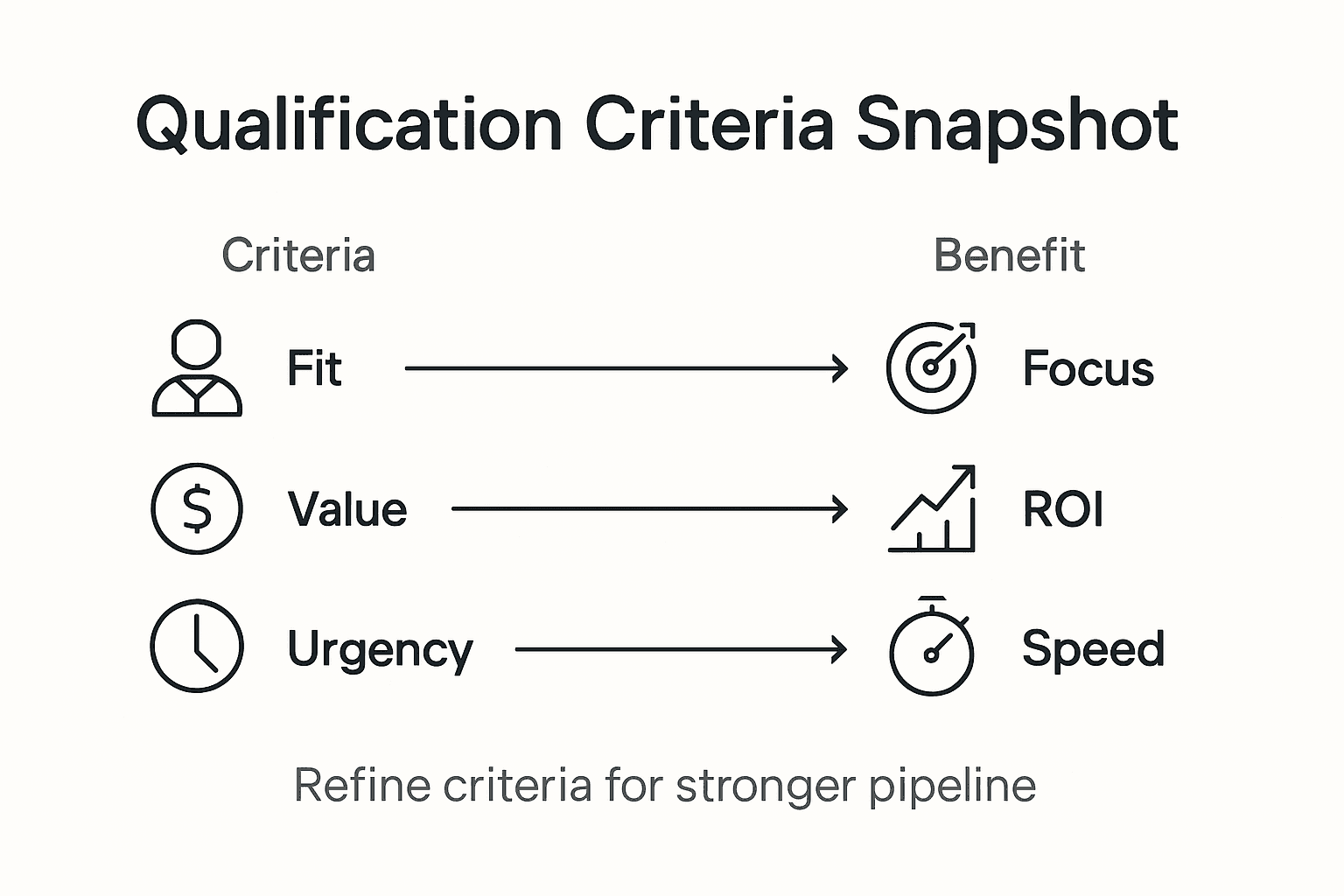
Effective opportunity qualification demands developing a structured scoring mechanism that objectively assesses each potential opportunity against predefined benchmarks. Design your qualification methodology to capture nuanced insights about the prospect’s strategic objectives, internal capabilities, and genuine motivation for change. This approach ensures your sales team concentrates resources on opportunities with the highest probability of successful conversion, dramatically improving pipeline efficiency and reducing wasted effort on low potential prospects.
Here is a summary of key criteria for high probability sales opportunities:
Dimension | Purpose | Business Benefit |
Strategic Alignment | Ensures fit with core business goals | Higher chance of long-term value |
Financial Potential | Assesses projected revenue impact | Supports accurate forecasting |
Organisational Readiness | Evaluates client’s preparedness | Reduces deal risk and delays |
Motivation for Change | Gauges urgency to commit | Increases likelihood of conversion |
Professional suggestion: Develop a weighted qualification scorecard that dynamically adjusts criteria based on real world conversion data and evolving market intelligence.
Step 5: Validate pipeline quality and readiness for advancement
Pipeline validation represents a critical checkpoint in ensuring your sales strategy translates from theoretical potential into genuine revenue momentum. This process demands a rigorous and systematic approach to assessing the true health and progression potential of your sales opportunities.
Comprehensive pipeline readiness assessment involves segmenting opportunities through precise measurement criteria that capture nuanced indicators of deal potential. Your validation process must transcend superficial volume metrics by implementing a multidimensional evaluation framework that examines opportunity characteristics such as strategic alignment, economic justification, decision making dynamics, and genuine client commitment. This requires developing sophisticated qualification benchmarks that objectively analyse each potential deal across multiple dimensions including customer fit, solution relevance, financial impact, and organisational readiness.
Effective pipeline validation demands creating a structured methodology that provides transparent and consistent insights into opportunity progression potential. Implement a dynamic scoring mechanism that allows real time assessment of pipeline health, enabling your sales leadership to make informed resource allocation decisions and proactively identify potential bottlenecks or emerging opportunities. By establishing clear stage definitions and rigorous advancement criteria, you transform pipeline management from a reactive administrative task into a strategic forecasting tool that drives predictable revenue generation.
Professional suggestion: Create a standardised pipeline validation scorecard that dynamically weights opportunity criteria based on historical conversion data and evolving market intelligence.
Unlock Predictable Growth through Strategic Sales Opportunity Creation
This article highlights a challenge many senior revenue leaders face: the struggle to define a clear commercial direction and prioritise high-value opportunities amid complex B2B sales environments. If you are feeling frustrated by a lack of qualified pipeline, low win rates, or long sales cycles, the insights on consultative engagement and advanced qualification criteria underscore the need for a systematic, disciplined approach to pipeline development and opportunity management.
At The Sales Coach Network, we understand that sustainable revenue growth demands more than generic training or motivational talks. We specialise in embedding scalable sales operating systems that align perfectly with the strategic steps outlined in this guide, from defining your commercial direction to validating pipeline readiness. Our tailored programmes focus on increasing qualified pipeline opportunities through consultative techniques, enhancing win rates by implementing rigorous qualification frameworks, and accelerating sales velocity by reducing cycle times.
Are you ready to transform your sales team’s approach to opportunity creation and see measurable results? Explore our Sales Training Programs and discover how our expert practitioners help senior sales leaders embed disciplined execution alongside strategic direction. Don’t let unpredictable revenue hold you back any longer. Visit The Sales Coach Network today and take the next step towards achieving consistent, scalable sales performance.
Frequently Asked Questions
How can I define a precise commercial direction for opportunity generation?
To define a precise commercial direction, start by mapping your market potential and strategic opportunities. Conduct thorough research on your target market segments, understand their pain points, and align your sales strategy with delivering genuine business value.
What criteria should I use to identify and prioritise target accounts?
Develop a comprehensive Ideal Customer Profile to assess potential accounts based on firmographic and technographic data. Create a tiering system that scores accounts based on revenue potential, strategic alignment, and likelihood of conversion to effectively prioritise your outreach efforts.
How do I implement consultative engagement in my sales strategy?
Integrate consultative engagement by actively listening to clients and understanding their challenges. Prepare open-ended questions before meetings to encourage discussion about their needs and position yourself as a trusted advisor rather than just a vendor.
What advanced criteria should I use to qualify sales opportunities?
Establish a customised qualification framework considering factors such as strategic alignment, financial potential, and organisational readiness. Develop a scoring system to evaluate prospects and ensure your team focuses on opportunities with the best chances for conversion.
How can I validate the quality of my sales pipeline?
Validate your pipeline by implementing a structured assessment that measures opportunity characteristics like client commitment and financial impact. Create a dynamic scoring system to provide real-time insights and make informed decisions about resource allocation and potential bottlenecks in your pipeline.
Recommended