
Sales Performance Analytics: Driving Predictable Growth
- The Sales Coach Network
- Jan 9
- 7 min read


Most british companies still miss the mark when it comes to extracting full value from their sales data, with over 60 percent of IT and professional services firms reporting they lack consistent sales analytics frameworks. For senior leaders in the UK, this means critical revenue opportunities often remain hidden or difficult to act on. This article sheds light on how advanced sales performance analytics transforms vague numbers into targeted growth, revealing practical strategies to improve predictability and drive strategic decisions at scale.
Table of Contents
Key Takeaways
Point | Details |
Sales Performance Analytics | Utilise data analysis to enhance sales effectiveness and drive strategic decision-making. |
Types of Sales Analytics | Implement descriptive, diagnostic, predictive, and prescriptive analytics to provide a comprehensive understanding of sales performance. |
Essential Sales KPIs | Track key performance indicators to identify strengths and weaknesses in the sales process and drive continuous improvement. |
Avoiding Pitfalls | Ensure high data quality and alignment of analytics objectives to prevent common implementation challenges in sales analytics. |
Defining Sales Performance Analytics and Its Role
Sales Performance Analytics represents a strategic approach to understanding and optimising organisational sales effectiveness through systematic data analysis. By leveraging advanced analytical techniques, businesses can transform raw sales data into meaningful insights that drive predictable growth and strategic decision-making.
Sales performance analytics fundamentally involves collecting, processing, and interpreting sales-related data to evaluate team performance, identify opportunities, and predict future revenue streams. Advanced data-driven decision strategies enable organisations to track critical performance metrics such as:
Monthly sales volumes
Customer acquisition costs
Conversion rates
Average deal sizes
Sales cycle lengths
By systematically analysing these metrics, sales leaders can gain granular insights into team performance, identify potential bottlenecks, and develop targeted strategies for improvement. The goal is not merely to collect data but to translate complex information into actionable intelligence that drives meaningful business outcomes.
Pro Tip: Implement a robust sales analytics dashboard that updates in real-time, allowing your team to monitor key performance indicators dynamically and make immediate strategic adjustments.
Key Types of Sales Analytics for B2B Teams
In the complex landscape of B2B sales, analytics have evolved into sophisticated tools that enable organisations to transform raw data into strategic insights. Sales data analysis techniques encompass multiple sophisticated approaches designed to provide comprehensive understanding of sales performance and potential.
Four primary types of sales analytics emerge as critical for B2B teams:
Descriptive Analytics: Provides historical perspective by examining past sales data, tracking key performance indicators, and understanding what has already occurred within the sales ecosystem.
Diagnostic Analytics: Delves deeper into understanding why specific sales outcomes happened, identifying root causes of performance variations, and revealing underlying patterns in sales behaviour.
Predictive Analytics: Utilises advanced machine learning algorithms to forecast future sales trends, anticipate potential market shifts, and estimate probable revenue trajectories based on historical data patterns.
Prescriptive Analytics: Goes beyond prediction by recommending specific actions sales teams should take to optimise performance, suggesting targeted strategies for improving conversion rates and deal closure.
These analytical approaches work synergistically, providing sales leaders with a comprehensive toolkit for understanding, interpreting, and strategically managing their sales processes. By integrating these different analytical perspectives, B2B organisations can develop more nuanced, data-driven approaches to revenue generation and team performance management.
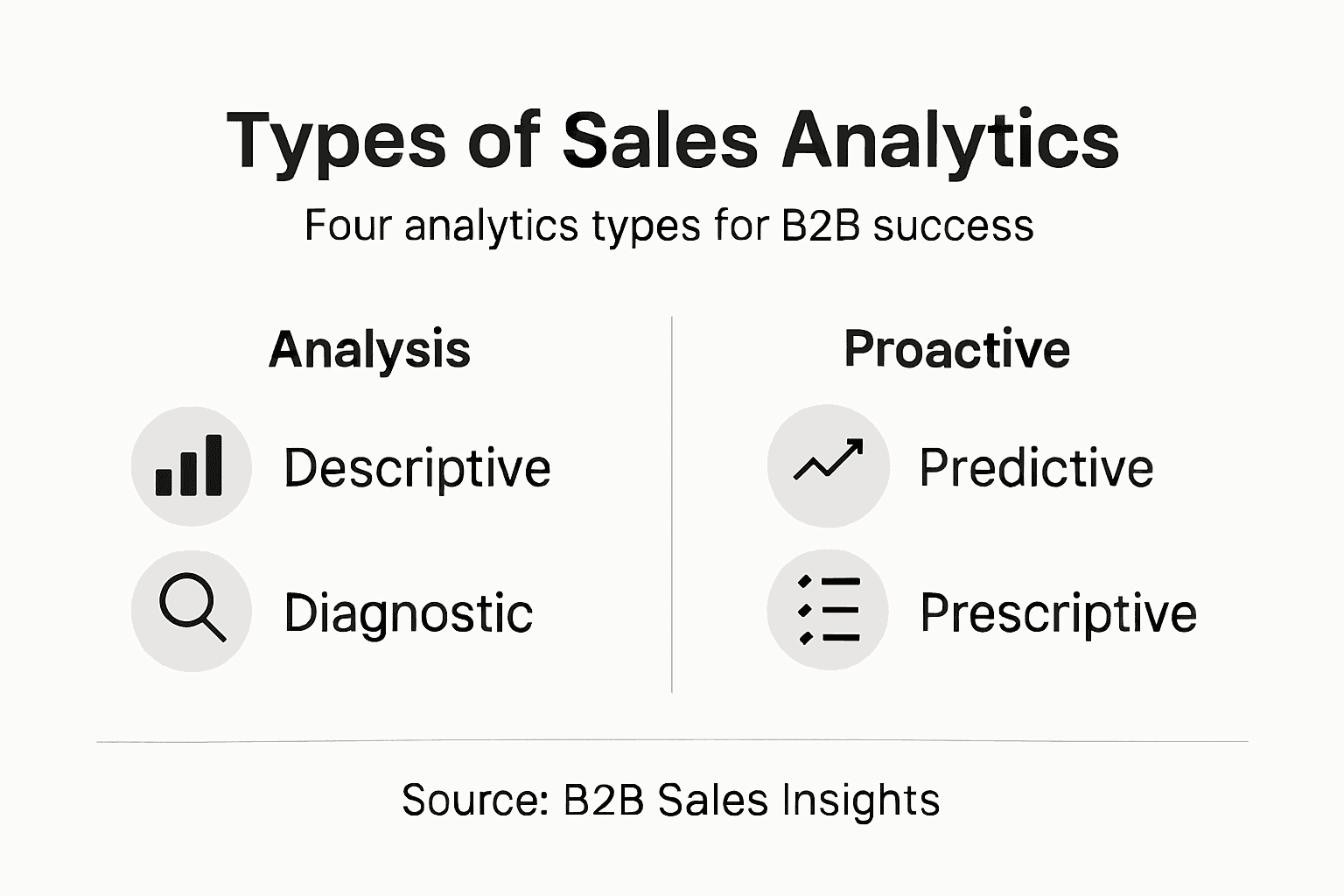
Here’s a comparison of the four key types of sales analytics and how each supports B2B decision-making:
Analytics Type | Main Purpose | Typical Tools Used | Strategic Benefit |
Descriptive | Review historical results | CRM reports, spreadsheets | Identify past trends and benchmarks |
Diagnostic | Explain causes of results | Data visualisation, statistical models | Uncover reasons for sales performance changes |
Predictive | Forecast future outcomes | Machine learning, forecasting software | Prepare for market shifts and revenue risks |
Prescriptive | Recommend optimal actions | AI-powered platforms, scenario modelling | Enable informed, data-driven decisions |
Pro Tip: Invest in a robust analytics platform that seamlessly integrates multiple analytical perspectives, enabling your sales team to transition smoothly between descriptive, diagnostic, predictive, and prescriptive insights.
Essential Sales KPIs and Metrics for Leaders
Sales leaders require a strategic arsenal of key performance indicators (KPIs) to drive predictable growth and maintain organisational performance. Role of sales performance metrics provides critical insights into organisational health and potential revenue generation.
Essential sales KPIs can be categorised into several strategic domains:
Revenue-Focused Metrics:
Total revenue generated
Revenue growth rate
Average deal size
Quarterly and annual revenue targets
Pipeline and Opportunity Metrics:
Number of new opportunities
Conversion rates
Sales pipeline velocity
Lead qualification rates
Win/loss ratios
Performance and Productivity Metrics:
Individual sales representative performance
Sales cycle length
Customer acquisition cost
Quota attainment percentages
Activity volumes (calls, meetings, proposals)
Successful B2B sales organisations understand that these metrics are not just numbers, but strategic insights that inform decision-making. By tracking and analysing these KPIs systematically, sales leaders can identify strengths, diagnose weaknesses, and develop targeted interventions to enhance overall sales performance.
Measuring these metrics requires sophisticated tracking systems that provide real-time, comprehensive visibility into sales ecosystem dynamics. The most effective approaches integrate multiple data sources, allowing for nuanced, contextual understanding of performance trends and potential opportunities.
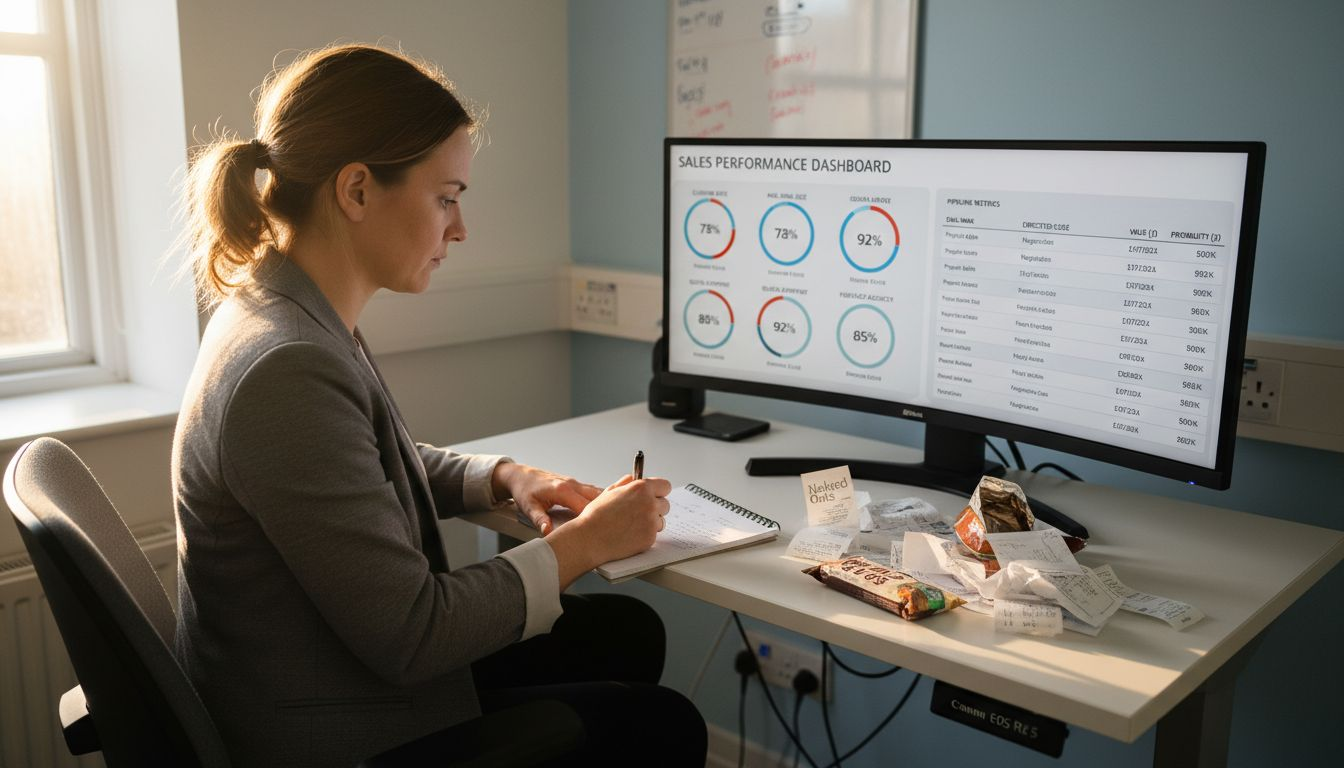
The following table summarises sales KPIs by strategic impact for leadership clarity:
KPI Domain | Example Metric | Business Impact |
Revenue | Total revenue, growth rate | Gauges company financial health |
Pipeline | Opportunity count, pipeline velocity | Reveals quality of sales funnel |
Productivity | Quota attainment, activity volume | Assesses team efficiency and effectiveness |
Pro Tip: Implement a dynamic dashboard that tracks KPIs in real-time, enabling immediate strategic adjustments and proactive performance management.
How Data-Driven Sales Management Transforms Results
Data-driven sales management represents a transformative approach that replaces traditional intuition-based decision-making with empirical, measurable insights. By systematically collecting, analysing, and interpreting sales data, organisations can unlock unprecedented levels of strategic precision and performance optimisation.
This approach fundamentally reshapes sales management through several critical dimensions:
Strategic Decision Making:
Replacing gut feelings with quantifiable evidence
Enabling predictive forecasting
Identifying precise performance improvement opportunities
Reducing risk through data-validated strategies
Performance Enhancement Mechanisms:
Real-time performance tracking
Granular insights into individual and team productivity
Objective assessment of sales representative capabilities
Targeted coaching and skill development
Customer Engagement Transformation:
Understanding nuanced customer behaviour patterns
Personalising sales interactions
Anticipating customer needs proactively
Creating more meaningful, data-informed relationships
Successful implementation requires robust technological infrastructure, including advanced customer relationship management (CRM) systems, comprehensive analytics platforms, and integrated data collection mechanisms. These tools enable sales leaders to move beyond traditional reporting and embrace a dynamic, intelligence-driven approach to sales management.
The most progressive organisations recognise that data-driven sales management is not merely a technological upgrade but a fundamental cultural shift. It demands commitment to continuous learning, transparency, and a willingness to challenge existing performance paradigms.
Pro Tip: Develop a comprehensive data literacy programme for your sales team, ensuring everyone understands how to interpret, leverage, and act upon analytical insights.
Pitfalls to Avoid in Sales Analytics Implementation
Common analytics implementation challenges can derail even the most sophisticated sales performance initiatives. Understanding and proactively addressing these potential obstacles is crucial for organisations seeking to leverage data-driven insights effectively.
Key pitfalls that sales leaders must navigate include:
Data Quality and Collection Challenges:
Inconsistent data collection methodologies
Incomplete or fragmented data sets
Lack of standardised data entry protocols
Unreliable or outdated information sources
Strategic and Operational Pitfalls:
Misaligning analytics objectives with business goals
Overemphasising quantitative metrics
Neglecting contextual qualitative insights
Failing to translate data into actionable strategies
Technological and Cultural Barriers:
Insufficient team training and data literacy
Choosing inappropriate analytics platforms
Inadequate integration between systems
Resistance to data-driven decision-making
Successful sales analytics implementation demands a holistic approach that transcends technological solutions. It requires cultivating a data-informed organisational culture, investing in continuous learning, and developing robust processes that transform raw information into strategic intelligence.
Organisations must approach sales analytics as an evolving discipline, continuously refining their methodologies, challenging assumptions, and remaining adaptable to emerging technological capabilities and market dynamics.
Pro Tip: Establish a cross-functional analytics review committee that regularly audits data collection processes, challenges analytical assumptions, and ensures alignment between technological capabilities and strategic objectives.
Unlock Predictable Sales Growth with Expert Analytics and Coaching
Sales Performance Analytics offers vital insights to transform your sales team’s effectiveness but mastering its full potential demands more than data alone. If you struggle with unpredictable revenue, stalled opportunities, or inconsistent team results, you are not alone. Common challenges like incomplete data interpretation, lack of actionable strategies, and absence of disciplined execution often stand in the way of turning analytics into true growth drivers.
At The Sales Coach Network, we bridge the gap between insightful sales analytics and measurable revenue uplift. Our proven methodologies embed scalable sales operating systems that increase pipeline opportunities, boost average deal value, and accelerate win rates while reducing sales cycle times. Unlike generic training, our approach emphasises the Forty-20-40 Principle combining strategy, enablement, and disciplined execution to embed sustainable change. Explore how our Sales Training Programs and tailored Sales Coaching Services help senior sales leaders adopt data-driven decision-making and build accountable, high-performing teams.
Ready to turn your analytics insights into consistent sales success? Discover how our expert practitioners can partner with your organisation to adapt, accelerate, and achieve predictable growth by visiting The Sales Coach Network today.
Frequently Asked Questions
What is sales performance analytics?
Sales performance analytics is a systematic approach to understanding and optimising sales effectiveness through data analysis. It involves collecting and interpreting sales-related data to evaluate team performance, identify opportunities, and predict future revenue streams.
What are the key types of sales analytics for B2B teams?
The four primary types of sales analytics for B2B teams are: Descriptive Analytics, Diagnostic Analytics, Predictive Analytics, and Prescriptive Analytics. Each type offers unique insights that help in understanding and managing sales processes more effectively.
Why are sales KPIs important for leaders?
Sales KPIs are essential for leaders as they provide critical insights into organisational health, potential revenue generation, and team performance. Tracking these metrics systematically allows for identifying strengths, diagnosing weaknesses, and developing targeted strategies for improved sales outcomes.
How can data-driven sales management transform results?
Data-driven sales management transforms results by replacing intuition-based decision-making with empirical insights. It enhances strategic decision-making, performance tracking, and customer engagement, allowing organisations to optimise performance based on real-time data.
Recommended