
What Is Sales Coaching and Why It Works
- The Sales Coach Network
- Dec 17, 2025
- 7 min read


Most british sales leaders recognise that the right coaching can mean the difference between average performance and standout results, yet over 60 percent of B2B sellers report never receiving consistent, personalised guidance. In today’s competitive market, traditional group training often falls short for complex british businesses where tailored skill development is essential. Discover how a smarter approach to sales coaching empowers teams with the targeted skills and confidence needed to thrive in demanding B2B settings.
Table of Contents
Key Takeaways
Point | Details |
Sales Coaching Enhances Performance | Focused on individual skill development, sales coaching transforms professionals into strategic, consultative sellers. |
Personalised Approaches are Essential | Effective coaching blends various methodologies tailored to meet unique team member needs and organisational objectives. |
Coaching vs. Training | Unlike standardised training, coaching is an ongoing, relational process that fosters targeted behaviour and skill changes. |
Data-Driven Strategies Boost Growth | Integrating predictive modelling with coaching methodologies allows for more precise identification of performance gaps and accelerates revenue growth. |
Defining Sales Coaching in Modern B2B
Sales coaching represents a strategic approach to enhancing sales team performance through personalised skill development and targeted performance improvement. Unlike traditional training programmes, sales coaching focuses on individual growth, addressing specific challenges, and transforming sales professionals into high-performing consultative sellers.
In modern B2B environments, sales coaching techniques encompass sophisticated methodologies designed to unlock individual potential. These approaches include interactive workshops, scenario-based training, role-playing exercises, and one-on-one mentoring sessions that help sales professionals develop critical skills such as executive-level communication, advanced qualification strategies, and value-based selling techniques.
The core objective of contemporary sales coaching is to create adaptable, strategic sellers who can navigate complex buying committees and build compelling business cases. By focusing on individual skill enhancement, coaching enables sales teams to move beyond generic approaches and develop nuanced strategies tailored to specific client environments. This personalised development approach addresses performance gaps, builds confidence, and creates a culture of continuous professional growth.
Pro Tip: Implement quarterly individual coaching sessions to track personal development, identify skill gaps, and create targeted improvement plans for each sales team member.
Core Approaches and Coaching Styles
Sales coaching has evolved into a sophisticated discipline with multiple approaches designed to address the complex challenges of modern B2B sales environments. These coaching styles are not one-size-fits-all but rather adaptive strategies that respond to individual team member needs, organisational objectives, and specific performance goals.
Coaching research indicates that effective approaches blend multiple methodological frameworks to create personalised development pathways. Key coaching styles include directive coaching, which provides specific guidance and instruction, supportive coaching that emphasises emotional intelligence and personal growth, and collaborative coaching that encourages mutual problem-solving and skill development.
Modern sales coaching recognises that different sales professionals require nuanced approaches. Some team members might benefit from a more structured, directive method, while others thrive with a supportive, exploratory style. Blended coaching approaches that combine mentoring, counselling, and traditional coaching techniques can be particularly effective in addressing diverse learning needs and performance challenges.
Pro Tip: Conduct individual learning style assessments to develop tailored coaching strategies that align with each sales team member’s unique strengths and development requirements.
How Coaching Differs from Sales Training
Traditional sales training and sales coaching represent fundamentally different approaches to professional development within sales organisations. While sales training typically involves standardised instructional methods delivered in group settings, sales coaching emphasises personalised skill enhancement that addresses individual performance challenges and learning needs.
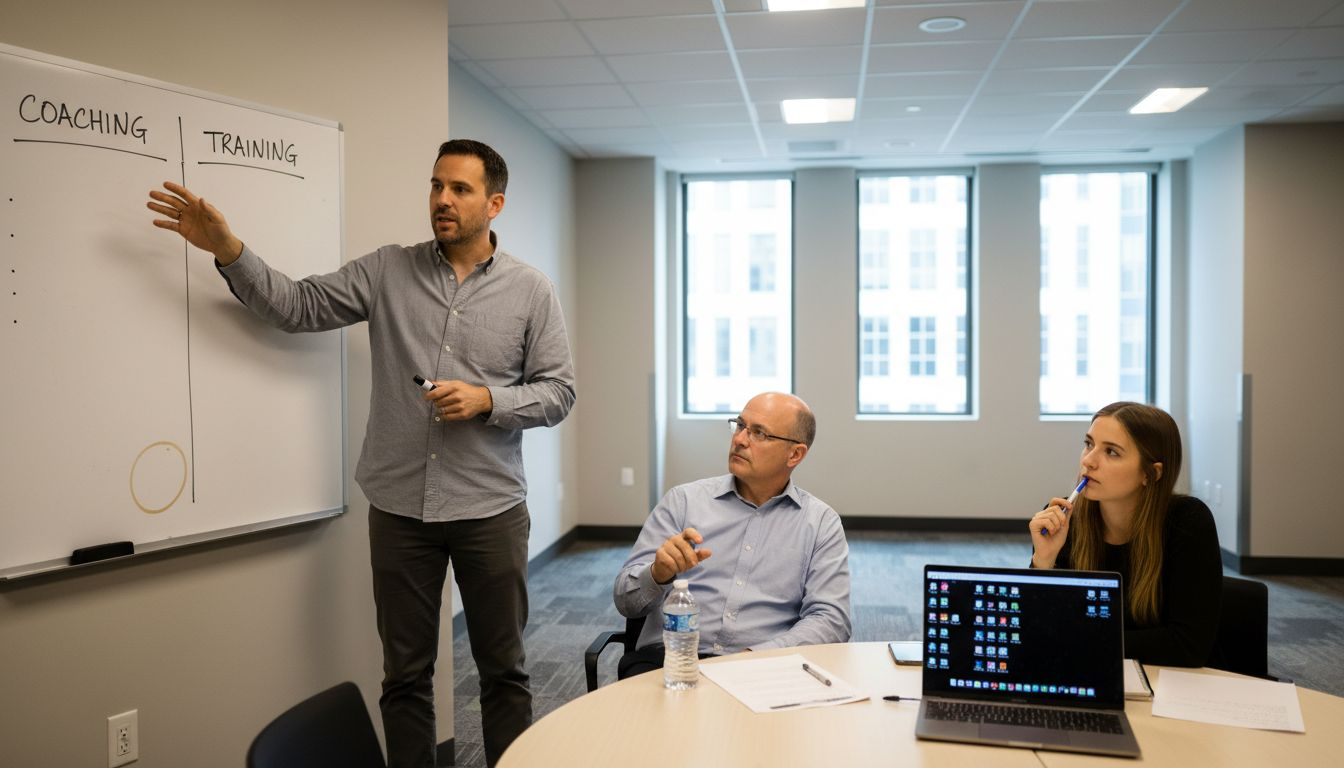
The key distinction lies in the depth and customisation of the development process. Sales training often follows a uniform curriculum, providing generic skills and techniques applicable to broad sales scenarios. In contrast, sales coaching involves a dynamic, ongoing relationship between a coach and a sales professional, focusing on targeted skill improvement, behavioural adaptation, and strategic thinking tailored to specific performance gaps.
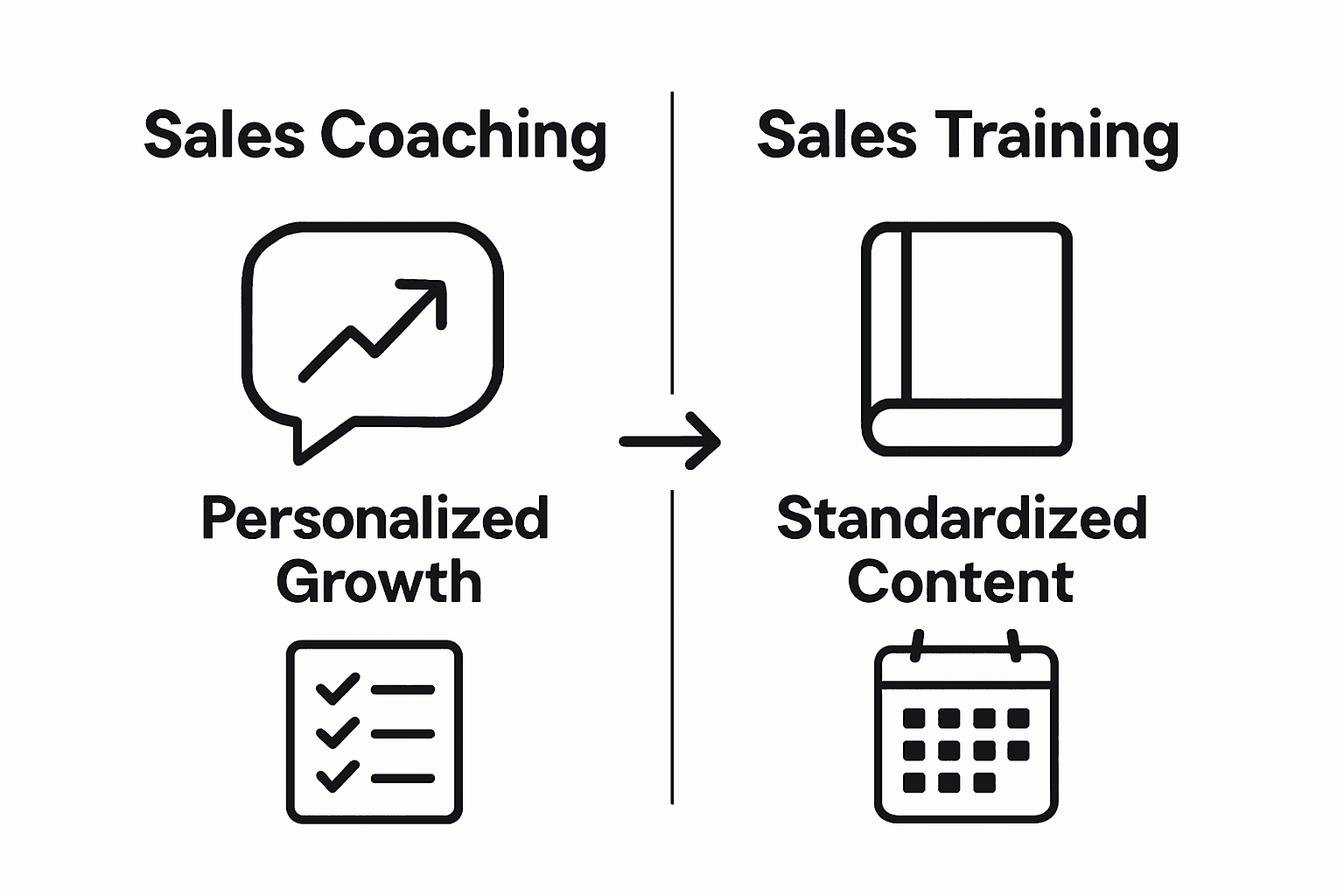
Moreover, sales coaching extends beyond skill transmission to include critical elements such as emotional intelligence, confidence building, and strategic problem-solving. Unlike one-dimensional training programmes that deliver information through lectures or workshops, coaching creates a supportive environment where sales professionals can explore their unique strengths, address individual challenges, and develop nuanced strategies for complex sales interactions. This approach recognises that effective selling requires more than memorising scripts or techniques.
Here’s a clear comparison of the core differences between sales coaching and traditional sales training:
Aspect | Sales Coaching | Sales Training |
Approach | Individualised and adaptive | Standardised and generic |
Interaction Style | Ongoing, relationship-based | One-off, group sessions |
Outcome Focus | Targeted skill and behaviour change | Broad knowledge transmission |
Measurement | Progress tracked over time | Completion of set curriculum |
Pro Tip: Implement a comprehensive assessment process to identify individual skill gaps and design personalised coaching interventions that align with both team performance objectives and personal development goals.
Driving Revenue Growth Through Coaching
Sales coaching emerges as a powerful strategic mechanism for driving sustainable revenue growth in modern B2B organisations. By focusing on individual performance enhancement and systemic skill development, coaching directly addresses the critical challenges that impede sales team effectiveness and organisational revenue generation.
The transformative potential of sales coaching extends beyond traditional performance improvement strategies. Advanced predictive modelling techniques can be integrated with coaching methodologies to create data-driven development frameworks that systematically identify and address performance gaps. This approach enables sales leaders to create targeted interventions that not only improve individual skills but also align team capabilities with strategic revenue objectives.
Moreover, effective sales coaching drives revenue growth by creating a culture of continuous learning and adaptive performance. By emphasising personalised skill development, emotional intelligence, and strategic thinking, coaching helps sales professionals move beyond transactional selling approaches. This holistic development strategy ensures that sales teams can navigate complex buying environments, build sophisticated client relationships, and consistently deliver value that translates directly into increased revenue potential.
Pro Tip: Develop a quarterly coaching scorecard that tracks both individual skill progression and direct revenue impact, enabling data-driven refinement of coaching strategies and demonstrating tangible return on investment.
Pitfalls and Misconceptions to Avoid
Sales coaching requires a nuanced understanding to avoid common misconceptions that can undermine its effectiveness. Many organisations mistakenly view coaching as a one-time intervention or a generic training programme, failing to recognise the sophisticated, personalised nature of true professional development.
Digital coaching interactions reveal complex communication challenges that can significantly impact performance. Sales leaders must be aware that communication effectiveness goes beyond simple information transfer, requiring careful alignment of verbal and non-verbal communication strategies. Misalignment between auditory and visual communication cues can create perception gaps that diminish the coaching experience and reduce overall impact.
Moreover, the emerging landscape of technology in coaching presents unique challenges. AI-driven coaching approaches can potentially undermine salesperson confidence if not implemented thoughtfully. While technological tools offer precision and data-driven insights, they cannot replace the nuanced, empathetic guidance of human sales managers. The most effective coaching strategies blend technological insights with human emotional intelligence, creating a comprehensive approach that addresses both quantitative performance metrics and individual psychological needs.
This table summarises common pitfalls in sales coaching and strategies to avoid them:
Pitfall | Why It Reduces Effectiveness | Recommended Solution |
Treating coaching as a one-off | Misses the need for continuous development | Make coaching an ongoing process |
Over-reliance on technology | Undermines critical human elements | Combine tech tools with real empathy |
Poor communication alignment | Causes misunderstandings and less impact | Align verbal and non-verbal cues |
Using generic coaching methods | Ignores individual team needs | Tailor approaches to each member |
Pro Tip: Conduct regular feedback sessions to assess the human and technological elements of your coaching approach, ensuring that digital tools complement rather than replace meaningful human interaction.
Unlock Your Sales Potential with Expert Coaching Tailored to Your Team’s Needs
The article highlights the immense value of personalised sales coaching in transforming product-focused sellers into strategic, consultative professionals capable of navigating complex B2B environments. If your sales organisation struggles with inconsistent performance, stalled deals, or unpredictability in revenue, it is a systemic issue that generic training events cannot fix. The key lies in adopting adaptive, ongoing coaching that addresses individual skill gaps while embedding disciplined execution, exactly as the article describes.
At The Sales Coach Network, we specialise in partnering with senior sales leaders facing challenges in growing pipeline opportunities, increasing average deal size, improving win rates, and accelerating sales cycles. Our sales training programs are designed to build real-world skills that align with your strategic direction, while our sales coaching services ensure these skills stick through manager-led coaching frameworks rooted in proven methodologies. Don’t settle for one-off training or motivational fluff — embed scalable sales operating systems that deliver sustainable revenue growth.
Ready to move beyond generic solutions and unlock the full potential of your sales team with tailored coaching? Visit The Sales Coach Network to discover how our expert practitioners can help your organisation adapt, accelerate, and achieve measurable results today.
Frequently Asked Questions
What is the primary objective of sales coaching?
Sales coaching aims to enhance individual performance by providing personalised skill development and targeted improvement strategies, transforming sales professionals into high-performing sellers.
How does sales coaching differ from traditional sales training?
Sales coaching focuses on individualised skill enhancement through ongoing relationships, whereas traditional sales training typically involves standardised group sessions that impart broad knowledge without personalisation.
What methods are commonly used in modern sales coaching?
Modern sales coaching employs techniques such as interactive workshops, scenario-based training, role-playing exercises, and one-on-one mentoring sessions to develop specific skills and address performance challenges.
How can organisations measure the impact of sales coaching on revenue growth?
Organisations can measure the impact of sales coaching by developing coaching scorecards that track individual skill progression and correlate these improvements with direct revenue outcomes.
Recommended